
 Panthers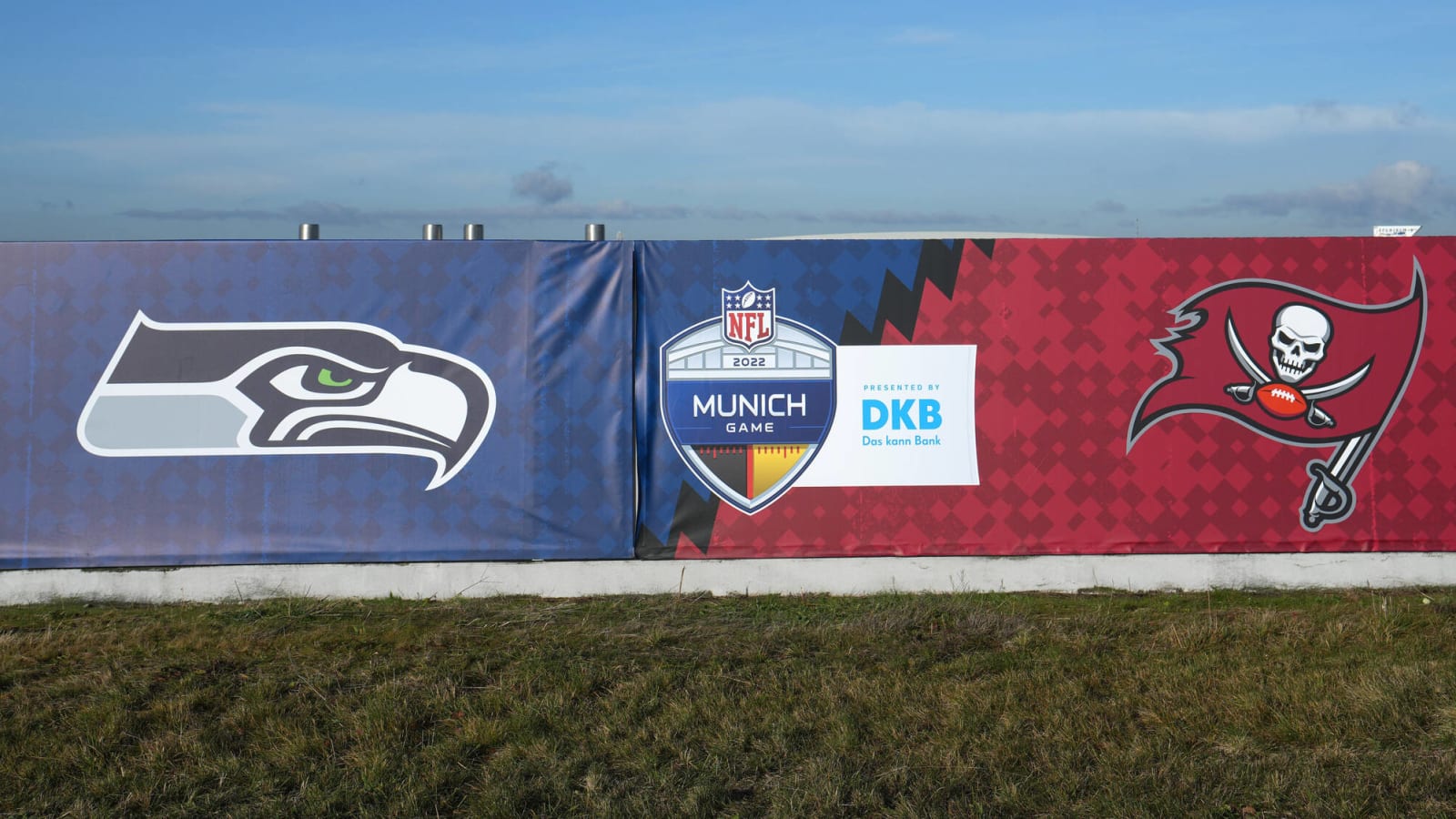
In December 1984, a letter appeared in a British magazine called Gridiron UK, asking a simple question: was anyone else in the country following the Tampa Bay Buccaneers? Six people wrote back. That was the entire membership of what became Bucs UK, a fan club that by its own account is still the longest-running NFL supporters' club in Britain, more than forty years and hundreds of members later.
It is a strange origin story for what would eventually become one of the most recognizable fanbases the NFL has outside the United States. There was no marketing department behind it, no league initiative, no stadium trip to point to. Just a handful of people in a country with three television channels, drawn to a team playing a sport most of their neighbors had never watched.
That gap, between organic fandom built from nothing and a deliberate, funded strategy to grow one, is the whole story of how the Buccaneers became a genuinely European team. It took forty years, a Manchester United takeover, three losses at Wembley, and eventually a sold-out Sunday morning in Bavaria to close.
A letter, then a magazine, then a website
Bucs UK's early history reads like fan culture before the internet made it easy. After the initial six replies, the group got the blessing of the team's PR director at the time and started producing a newsletter. By the time it moved online in 2001, it had put out 197 monthly issues. Along the way, members organized their first trip to Tampa in 1988, then made it a regular pilgrimage.
The club has since been formally recognized by the organization it follows from an ocean away. Buccaneers co-chairman Bryan Glazer has pointed to it directly, saying the team has "the longest running fan club of any NFL team in the UK." That is a claim made by the club and echoed by ownership, not an independently audited record, but it lines up with a simple fact: every other Florida-based Buccaneers booster club from that era had folded by the mid-1990s. Bucs UK is what survived.
What is easy to miss is that none of this happened because the Buccaneers were trying to build a UK fanbase. It happened because a handful of people wanted one, decades before "international marketing" was a line item on an NFL team's budget. That same pattern, fans finding a team years before the team notices them back, would repeat itself in Germany almost forty years later.
A red devil in south Florida's mailbox
The Glazer family bought the Buccaneers in January 1995 for $192 million, a league record at the time, months after the death of longtime owner Hugh Culverhouse. A decade later, the family made a very different kind of purchase on the other side of the Atlantic.
Between 2003 and 2005, Malcolm Glazer gradually bought out shareholders in Manchester United, completing a takeover valued at roughly £790 million. The deal was hugely controversial in England, loaded with debt that critics said was placed onto the club's own books rather than the family's, and it triggered years of organized fan protest. None of that is in dispute, and none of it is the point here.
What matters for a Buccaneers fan reading this from Germany or the Netherlands is simpler: from 2005 onward, the name Glazer appeared constantly in European sports pages, next to one of the most famous football clubs on the planet. A family that already owned an NFL team was now impossible to avoid if you followed English football at all. It did not automatically turn anyone into a Buccaneers fan. But it put the Glazer name, and by extension the Buccaneers, in front of millions of Europeans who would otherwise have had zero reason to know a small-market Florida franchise existed.
That kind of exposure cannot be bought with an advertising budget. It came, awkwardly and unintentionally, from a business decision made for reasons that had nothing to do with American football.
Three damp trips to England
The NFL's International Series began sending regular-season games to London in 2007, and the Buccaneers made their first trip two years later. On October 25, 2009, Tampa Bay lost to the New England Patriots 7-35 at Wembley Stadium in front of 84,254 people, a lopsided score against a team that would go on to a very different kind of season than the Buccaneers' own 3-13 finish that year.
Two years later, on October 23, 2011, the Buccaneers were back at Wembley to face the Chicago Bears, losing 18-24 in front of a smaller crowd of 76,981. Wikipedia's account of the game notes that ticket sales for that trip had been affected by the timing of that year's NFL lockout, which delayed scheduling and promotion.
The Buccaneers would not return to London for eight years. When they finally did, on October 13, 2019, the venue had changed to the newly opened Tottenham Hotspur Stadium, and the result had not improved: a 37-26 loss to the Carolina Panthers.
Three trips to England, three losses. It is not the record a marketing department would choose to build a brand around, and for a long time it was easy to read the Buccaneers' relationship with European football as little more than an away game with a longer flight.
The Brady surge
Then Tom Brady signed with Tampa Bay in March 2020, and the numbers around the franchise changed overnight, whatever the win-loss column said.
According to Fanatics, the NFL's official merchandiser, the Buccaneers went from the 28th best-selling team in the league in 2019 to first in 2020, a jump the company's executive chairman Michael Rubin called the single biggest one-year increase in Fanatics' history. Brady's own jersey sales set an NFL record for a player in a single year, according to reporting at the time.
Those are U.S. retail figures, not a direct measure of European interest. But a jersey surge of that size does not stay contained inside one country's borders, and it landed at exactly the moment the league was about to hand the Buccaneers something they had never had before: an entire country to call their own.
A marketing plan with a stadium attached
In December 2021, the NFL rolled out a new International Home Marketing Areas program, or IHMA, splitting marketing rights to eight countries among eighteen teams for an initial five-year term starting January 1, 2022. The idea was simple on paper: instead of an international market belonging to the league as a whole, a single team would get the rights to build its brand in a specific country, sell jerseys, run promotions, sign local sponsors and stage fan events there, the same way a European club might open an office abroad before ever playing a friendly in it. Germany was shared on paper among four franchises, the Buccaneers, the Kansas City Chiefs, the New England Patriots and the Carolina Panthers, but the Buccaneers were the ones formally awarded it as their home international market, and it was Tampa Bay that turned the paperwork into a physical presence.
Buccaneers co-chairman Joel Glazer, who also chairs the NFL's International Committee, explained the thinking at the time: "We are thrilled to embrace Germany as our international home market and look forward to strengthening our presence in a part of the world that is already home to many Buccaneers fans." Head coach Bruce Arians, not usually a man for corporate lines, sounded genuinely enthusiastic in the same announcement: "Every time I've been to Europe I've met so many German fans. It's just an amazing group." Brady, still the face of the franchise at that point, called the prospect of playing in Germany "a great opportunity for us all."
An IHMA is not a promise of games. Whether an actual game follows depends on a separate scheduling process at league level. But two months later, in February 2022, the NFL confirmed that Munich and Frankfurt would host regular-season games over the following four years, and the pairing wrote itself: the team that already held German marketing rights would be the one to introduce the league to the country in person, as the designated home team against the Seattle Seahawks.
The first Sunday morning in Munich
The sun was barely up over Bavaria when Tom Brady jogged out of the tunnel at Allianz Arena, home of FC Bayern Munich, a stadium built for football of an entirely different kind. It was full: 69,811 people, a sellout, on a Sunday morning that was really a Sunday afternoon in Bavaria, kicked off at 9:30 a.m. Eastern Time for the broadest possible American television audience. It was November 13, 2022, the first regular-season NFL game ever staged in Germany.
The city treated it like a festival. Thousands of fans packed a free NFL fan activation at Odeonsplatz in the days before the game, where a temporary NFL Shop and 32 giant helmet displays, one for every team, turned a historic square in central Munich into something that looked more like an American mall concourse than Bavaria. Twenty-one local bars ran team and league-themed watch parties in the run-up, pulling in tens of thousands more people who never made it inside the stadium at all.
Inside Allianz Arena, the Buccaneers won a tight, occasionally sloppy game 21-16. It was not a classic, but nobody in that building was there purely for the football. NFL commissioner Roger Goodell called the German crowd "extremely passionate and respectful," and said fans had "welcomed the NFL with open arms." Around 2.7 million people in Germany watched on ProSieben, a record for an NFL game in the country, alongside 5.8 million viewers on NFL Network back in the United States, a striking number for a Sunday morning slot built around a foreign market.
For a Buccaneers team that had opened the season 2-0 before losing five of its next six games, the trip to Munich mattered on the field too. Tampa Bay arrived at 4-5 after snapping that slide against the Los Angeles Rams the week before. Bruce Arians, by then a senior adviser to general manager Jason Licht rather than the head coach, later defended his former offensive staff in an interview with JoeBucsFan, saying bluntly of Brady's form before the trip: "Nobody is going to say that Brady was playing bad, but he was playing bad." The win in Germany pushed Tampa Bay to 5-5 and back into the thick of a mediocre but ultimately winnable NFC South, one the Buccaneers would go on to claim at 8-9.
Building something that outlasts one game
A single trip overseas can generate headlines. What turns it into a fanbase is what a team does in the years that follow, and this is where the Buccaneers have quietly kept working.
In April 2023, the NFL expanded the Buccaneers' international rights to include Austria and Switzerland, giving the organization a foothold across all three major German-speaking markets rather than Germany alone. Team chief operating officer Brian Ford framed it as a natural next step: "We are excited to expand our international reach to include Austria and Switzerland, in addition to our ongoing efforts in Germany." The expansion came with substance behind it: by then the Buccaneers were already funding roughly 40 flag football teams across five German cities, supplying equipment to around 1,400 players between the ages of 11 and 15, a grassroots bet that today's flag football kids are tomorrow's German NFL fans, or German NFL players.
In late 2024, the club moved from marketing campaigns to physical infrastructure. In November 2024, the Buccaneers opened a permanent fan hub, branded the Krewe Embassy, at Ned Kelly's on Frauenplatz in central Munich, with former Buccaneers sack leader Shaquil Barrett flying over to help celebrate the opening on November 8. A second hub followed in Frankfurt the next month, at Chicago Meatpackers, giving German fans two standing meeting points to watch games together rather than relying on whichever sports bar happened to carry the NFL package that week. Around the same time, in August 2024, the team announced a travel partnership with Discover Airlines, aimed squarely at making the Tampa Bay to Germany route, and the reverse trip for fans heading to Raymond James Stadium, less of a logistical ordeal.
The relationship keeps producing small, personal moments too. For the 2026 NFL Draft in Pittsburgh, the Buccaneers flew over their International Fan of the Year, a supporter from Germany, and put him on stage to announce the team's third-round pick, the kind of gesture that means a great deal to a fanbase used to watching the draft happen on another continent at an hour that requires setting an alarm.
The Buccaneers' international games
Year | City | Opponent | Result |
|---|---|---|---|
2009 | London | New England Patriots | Lost 7-35 |
2011 | London | Chicago Bears | Lost 18-24 |
2019 | London | Carolina Panthers | Lost 26-37 |
2022 | Munich | Seattle Seahawks | Won 21-16 |
Where 2026 finds them
Here is the part of the story that does not flatter the marketing department: the Buccaneers have not played another game in Europe since that morning in Munich. The NFL kept expanding its footprint on the continent without them. Berlin got its own return trip in November 2025, when the Atlanta Falcons hosted the Indianapolis Colts at Olympiastadion, and the 2026 international slate adds Madrid, Paris, and a new game in Rio de Janeiro on top of the usual London dates, while Munich itself goes to the New England Patriots and Detroit Lions that November. Neither the Berlin nor the Munich games involve Tampa Bay. The five-year German marketing rights term that began in January 2022 is also due to expire at the end of 2026, with no public word yet on a renewal or a 2027 return trip.
There is also a quieter irony worth sitting with. Despite three trips to Wembley and Tottenham, and a fan club that predates the league's entire international strategy by decades, the Buccaneers have never held official UK marketing rights under the IHMA program. Those belong to six other franchises. Bucs UK's members did not need a league program to exist in the first place, and they have kept going without one.
What has not slowed down is everything around the German-speaking markets. The bars in Munich and Frankfurt still fill up on Sunday evenings and Monday mornings local time. The flag football programs the club funded in 2023 have had three more years to produce players who grew up thinking of the Buccaneers, not some vague idea of "American football," as their team. A fanbase that started with curiosity about one road trip to Bavaria has had four years to turn into something closer to what British fans built decades earlier: a community that watches every week, game in Germany or not.
That, in the end, is the real shape of "Europe's team": not one clean story, but two very different ones running in parallel, joined by the same slow logic. A supporters' club in Britain that built itself from a magazine letter with no help from anyone in Tampa. A marketing department three thousand miles away that spent the 2020s catching up to what fans in Germany, Austria and Switzerland were already starting to feel, thanks in part to a family name that meant something at Old Trafford before it meant anything at Raymond James Stadium. Munich was one Sunday morning. Everything since has been the harder, slower work of making it stick. Both stories are still running. Neither one is finished.

No comments yet. Start the conversation.