
 Panthers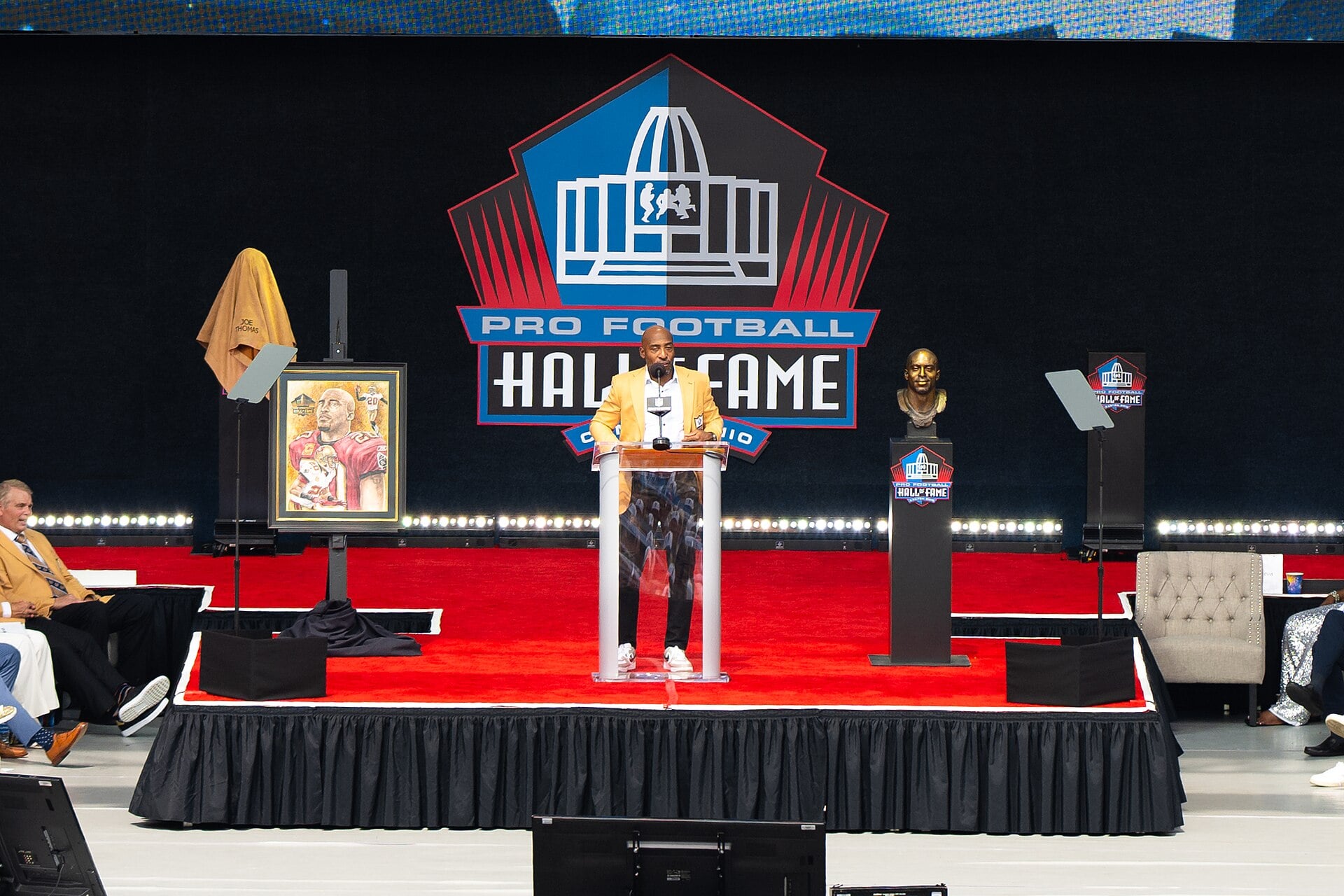
For a stretch of NFL history, the hardest problem in football was not beating the Tampa Bay Buccaneers physically. It was solving a puzzle: eleven defenders who all seemed to be exactly where the ball was going, running a defense so simple to describe and so hard to actually play that half the league eventually tried to copy it and most of them failed. That defense earned its own name, Tampa 2, and understanding it is one of the more useful things a new NFL fan can learn, because versions of it are still on the field today.
The building block: Cover 2
Start with Cover 2, the coverage Tampa 2 is built on top of. In Cover 2, two safeties sit deep, each responsible for one half of the field beyond about 15 to 20 yards downfield. The cornerbacks play closer to the line, jamming and covering the shorter, outside passing lanes. Underneath, linebackers cover the short and intermediate middle of the field. Up front, a four-man defensive line tries to generate pressure on the quarterback without help, which frees up the other seven defenders for coverage and run support.
It is a sound, conservative shell. Two deep safeties make it hard to throw over the top of the defense, and it defends the run well because it does not need to send extra blitzers to get pressure. But Cover 2 has a well-known hole: the deep middle of the field, right between the two safeties, and the short area right in front of them but behind the cornerbacks and linebackers. A tight end or slot receiver running a seam route, straight up the middle of the field, can split the two safeties if nobody plugs that gap.
The Tampa twist: a linebacker who runs backward
Tampa 2 is what happens when a defense tries to close that hole without giving up a pass rusher or a coverage defender elsewhere. The fix is almost stubbornly simple: on passing downs, the middle linebacker sprints backward into that deep-middle gap, effectively becoming a third deep defender for a few crucial seconds. If he gets there in time, the defense briefly resembles a three-deep zone even though it started out looking like standard Cover 2.
That one adjustment is the entire trademark of the scheme, and it explains why it demands a specific kind of player at middle linebacker: fast enough to turn and run 15 to 20 yards deep before the quarterback's throw arrives, instinctive enough to read run or pass instantly, and disciplined enough to make that drop on every single snap rather than cheating toward the more exciting job of blitzing. Everywhere else on the field, the same demand for speed over size applies. Defensive linemen need to win with quickness rather than raw power, because the scheme is built around a four-man rush getting home on its own, no blitzing safety or linebacker bailing it out. Cornerbacks need to tackle well in space more than they need lockdown man coverage skills, because they are often the last line of defense against a short completion turned into a long gain.
A simple guide to who does what
Position | Job in the Tampa 2 |
|---|---|
Defensive ends | Win the edge with speed, collapse the pocket without a blitz |
Defensive tackles | Push the pocket up the middle, quick enough to loop into rush lanes |
Outside linebackers | Cover the flats and short middle, support the run |
Middle linebacker | Read run or pass instantly, then drop into the deep middle zone on passes |
Cornerbacks | Jam receivers at the line, cover short and intermediate outside zones, tackle in the open field |
Safeties | Split the deep field into two halves, help against the run when the pass drops away |
Where it actually came from
The scheme carries the Buccaneers' name, but its DNA is older. Bud Carson, defensive coordinator for the Pittsburgh Steelers' Steel Curtain teams of the 1970s, is widely credited with developing the underlying Cover 2 concept, pairing an aggressive four-man front with a zone scheme that used an athletic middle linebacker, Jack Lambert, in ways that were unusual for the era. Carson had also worked on early versions of the coverage as a college coach at Georgia Tech before bringing it to Pittsburgh under head coach Chuck Noll.
Tony Dungy played and later coached in that same defensive lineage. Dungy has said publicly that his defensive philosophy traces back to what he learned from those 1970s Steelers teams. When he became Tampa Bay's head coach in 1996, he and defensive coordinator Monte Kiffin built their own version of that Cover 2 foundation, adding the deep-dropping middle linebacker as the signature wrinkle. The name Tampa 2 followed naturally once the Buccaneers started running it better than anyone else in the league.
The players who made it work
A scheme is only as good as the roster running it, and the Buccaneers of the late 1990s and early 2000s had one of the most talented defensive groups in NFL history built almost entirely around what Tampa 2 required.
Warren Sapp, at defensive tackle, gave the interior line a rare combination of first-step quickness and strength, drawing double and triple teams that freed up teammates elsewhere. He was named the Associated Press NFL Defensive Player of the Year in 1999 and finished his career with 96.5 sacks, an exceptional total for an interior lineman, and was inducted into the Pro Football Hall of Fame in 2013.
Simeon Rice, at defensive end, gave the scheme the outside pass rush it depended on, since Tampa 2 could not lean on extra blitzers to get to the quarterback. Rice finished his career with 122 sacks and earned three Pro Bowl selections.
Derrick Brooks was the linebacker the entire scheme was designed around, fast enough to drop into coverage and instinctive enough to still be a devastating run defender. He was the Associated Press Defensive Player of the Year in 2002, made eleven Pro Bowls, and was inducted into the Pro Football Hall of Fame in his first year of eligibility in 2014.
John Lynch, at strong safety, brought physical run support close to the line, a role teammate Sapp once summed up by calling him the defense's "eighth man in the box against the run." Lynch made nine Pro Bowls and was inducted into the Hall of Fame in 2021.
Ronde Barber, at cornerback, gave the Buccaneers a defender who could tackle in space as well as cover, a rare and valuable trait in the scheme. He finished his career with 47 interceptions and 28 sacks, the only player in NFL history with at least 45 interceptions and 25 sacks, and was inducted into the Hall of Fame in 2023.
2002: the numbers that proved the point
The clearest evidence for how dominant Tampa 2 could be arrived in the 2002 season. Under new head coach Jon Gruden, who inherited Kiffin's defense and largely left it alone, the Buccaneers finished 12-4 and allowed just 196 points across the regular season, one of the stingiest defensive seasons of the sixteen-game era. Opposing quarterbacks managed only a 48.4 passer rating against Tampa Bay that year. The Buccaneers became the first team since the 1985 Chicago Bears to lead the league in total defense, points allowed, and interceptions in the same season.
That defense carried Tampa Bay through the postseason: a 31-6 divisional round win over San Francisco, a 27-10 NFC Championship win over Philadelphia sealed by a 92-yard Ronde Barber interception return for a touchdown, and finally a 48-21 rout of the Oakland Raiders in Super Bowl XXXVII, the first championship in franchise history. Kiffin's defensive units finished in the top ten in the league in points allowed and yards allowed ten times during his thirteen seasons as Tampa Bay's coordinator, from 1996 through 2008, a run of consistency that remains an NFL record.
How the scheme spread across the league
Once it became clear that Tampa 2 could turn a middling roster into a championship defense, other teams went looking for anyone who had helped build it in Tampa. Two of Dungy's own assistants ended up as the scheme's most successful evangelists.
Lovie Smith spent five seasons, 1996 through 2000, as the Buccaneers' linebackers coach under Dungy, helping develop the scheme from the inside. As head coach of the Chicago Bears from 2004 to 2012, he installed his own Tampa 2, and by 2005 the Bears' defense ranked second in the league in yards allowed and first in points allowed, earning Smith the NFL Coach of the Year award. That defense helped carry Chicago to Super Bowl XLI in the 2006 season, where the Bears lost 29-17 to Dungy's Indianapolis Colts, a genuinely unusual matchup of two head coaches who had built their careers on the same scheme, on opposite sidelines of the same Super Bowl.
Dungy himself took the scheme to Indianapolis when he became the Colts' head coach in 2002, adapting Tampa 2 principles to a roster built around a high-powered offense rather than a dominant one on defense. The approach still worked well enough to help the Colts win Super Bowl XLI, making Dungy the first Black head coach to win an NFL championship.
Rod Marinelli, Tampa Bay's defensive line coach from 1996 to 2005, was credited with developing both Sapp and Rice into Hall of Fame-caliber pass rushers before taking the Detroit Lions' head coaching job in 2006. His tenure in Detroit was a defensive coach's cautionary tale rather than a triumph, a difficult stretch that included the winless 2008 season, but Marinelli's reputation as a defensive line teacher survived it. He went on to serve as a defensive coordinator in Chicago, Dallas and Las Vegas, still working from many of the same principles he had helped install in Tampa.
By the middle of the 2000s, versions of the scheme had spread well beyond the coaches who learned it directly in Tampa Bay, as front offices around the league searched for their own Sapp, their own Brooks, or at least their own fast, disciplined middle linebacker who could run the drop that made the whole thing work.
Why it eventually faded
Tampa 2's core weakness was always the same one Cover 2 had before it, just narrower: the deep middle only stays covered if the middle linebacker gets there in time, and if he does not, or if an offense finds a way to occupy him before he can drop, that same seam route becomes available again. As passing offenses got more sophisticated, spreading receivers and tight ends across the field and forcing linebackers to defend more ground before the snap even happened, a defense that relied on one linebacker solving that puzzle on every single down became harder to sustain without an unusually gifted player at that position.
The scheme also demanded a very specific type of roster: fast, disciplined players at almost every position, with a defensive line good enough to pressure the quarterback without blitz help. That is a difficult roster to build and an even harder one to keep intact through free agency and the draft year after year. As the era's great Tampa 2 defenses aged out, replacing that talent, and that discipline, proved to be the harder job.
What has not gone away is the underlying idea. NFL defenses still ask safeties to split deep zones, still ask a rangy linebacker to help in coverage, and still build fronts that can pressure a quarterback with four rushers alone. The label Tampa 2 may not get used as often as it did twenty years ago, but the version of football it represented, speed and discipline over sheer size, reshaped how defensive coordinators thought about building a roster, long after the specific play call went out of fashion.
No comments yet. Start the conversation.