
 Panthers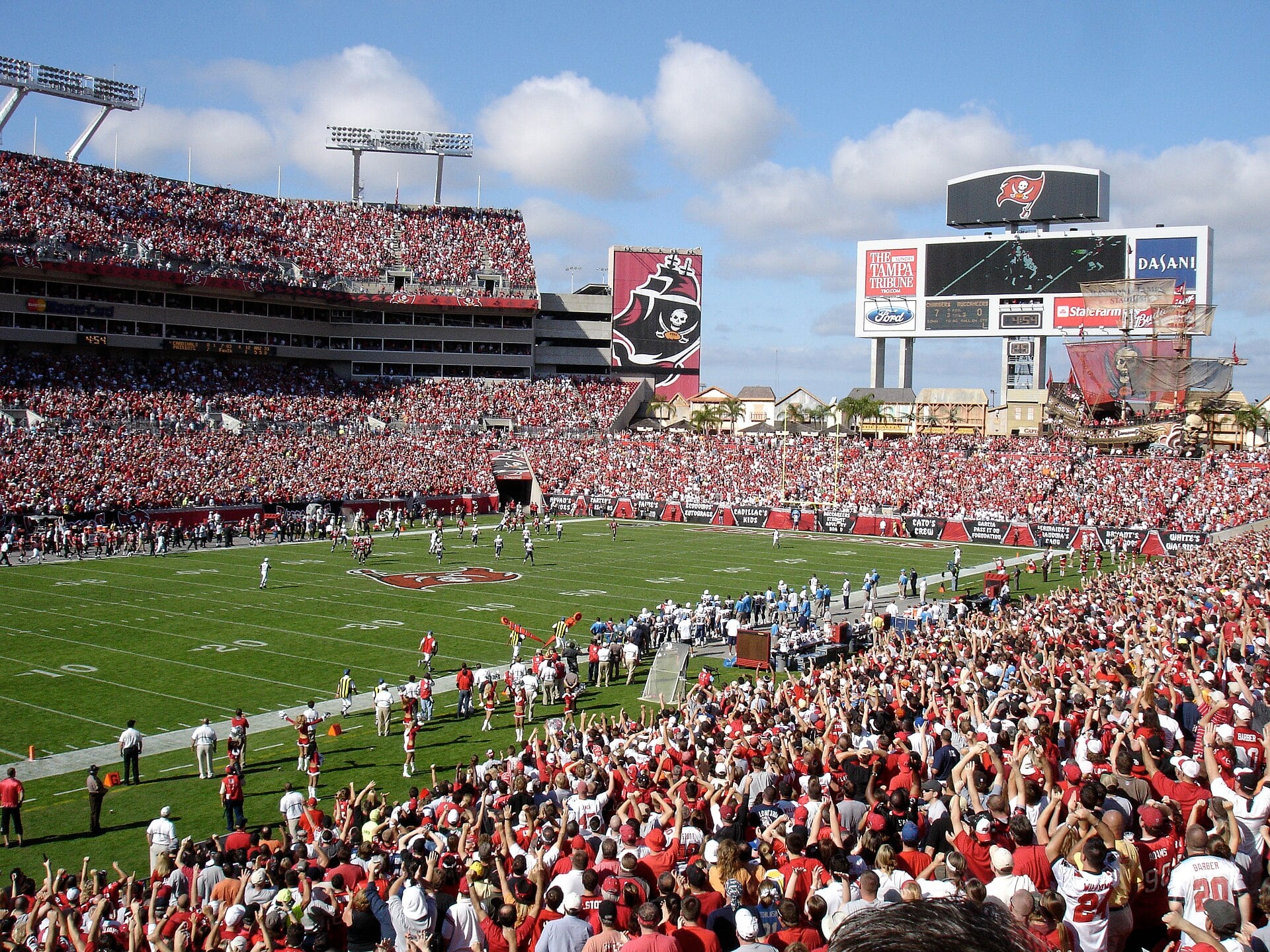
On April 9, 1997, at a press conference in downtown Tampa, a football team formally buried a cartoon. For twenty-one seasons the Tampa Bay Buccaneers had worn an orange-skinned pirate with a knife between his teeth and a jaunty red hat, a logo fans and critics alike had nicknamed Bucco Bruce. That afternoon the Buccaneers unveiled his replacement: a tattered flag, a skull, two crossed swords, and a color that almost nobody outside a hardware store or an antiques fair used in everyday conversation. Pewter.
Within eighteen months that new identity would be worn by a playoff team, playing in a brand new stadium, coached by a defensive-minded former Steelers safety who had never had a losing record as a head coach for more than one season. None of that was a coincidence. The 1997 rebrand and the on-field turnaround were the same story, told in two different departments of the same building.
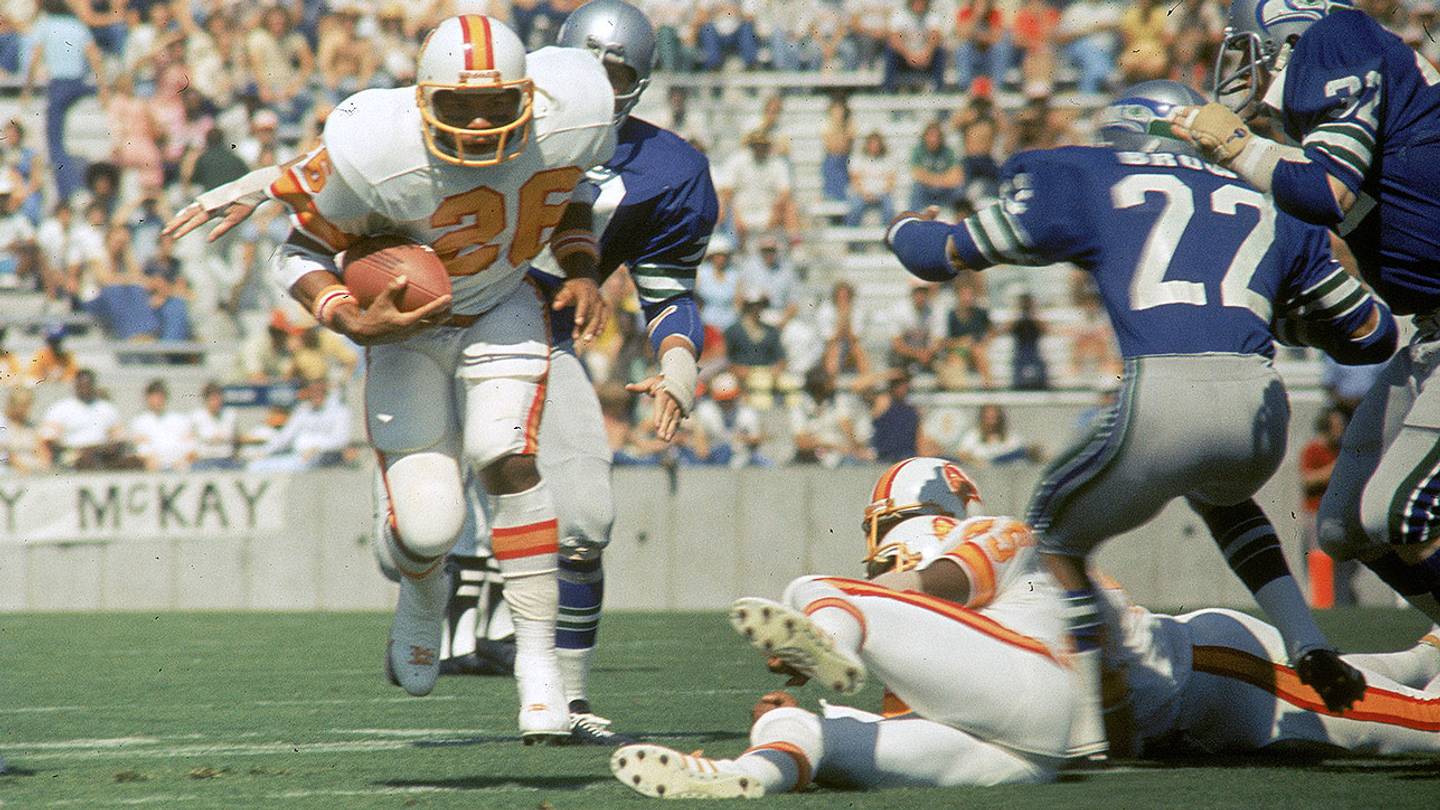
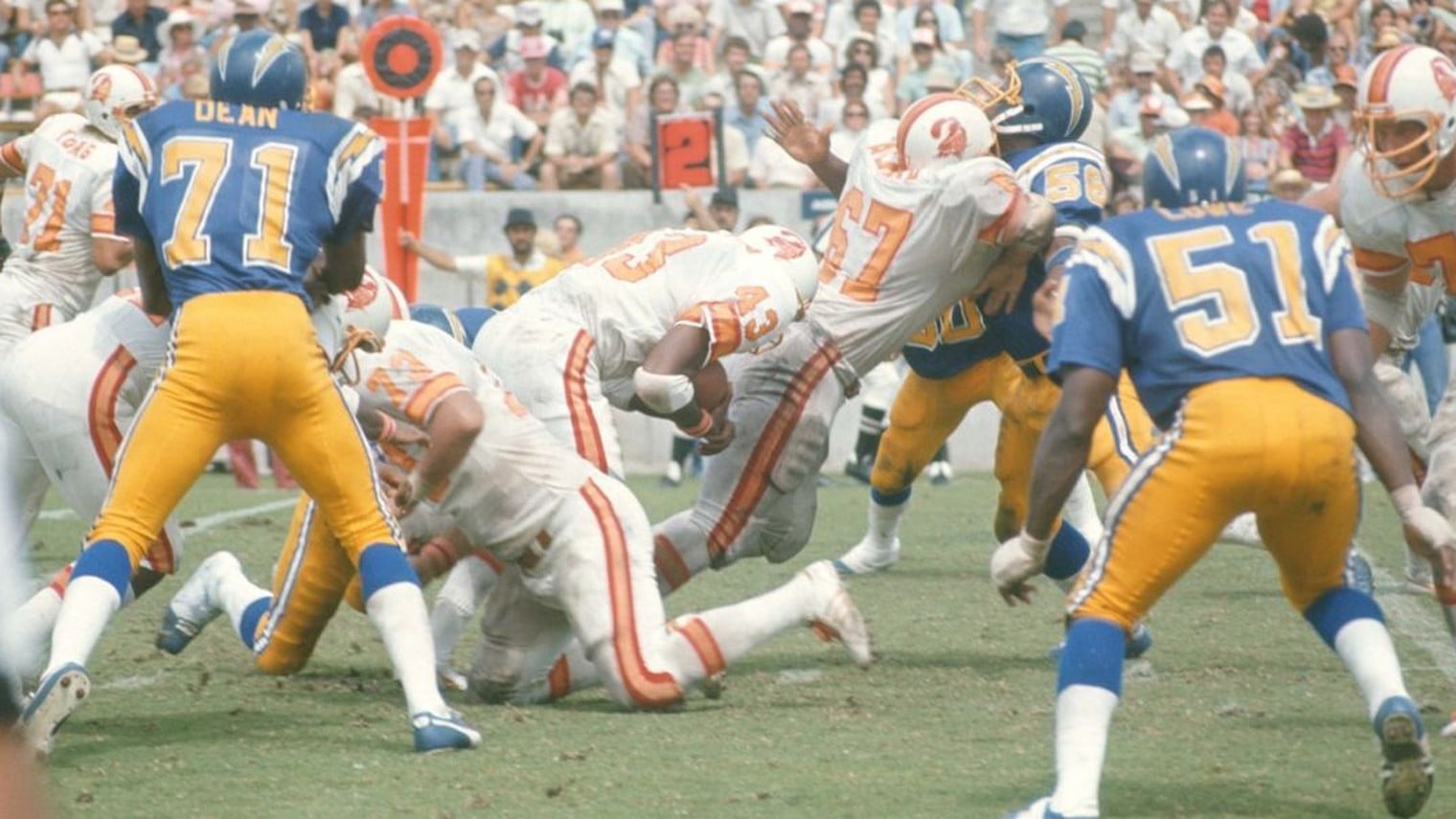
Two decades under Bucco Bruce
To understand why the Buccaneers wanted a new look so badly, it helps to remember how bad the old one had it. Tampa Bay entered the NFL as an expansion team in 1976 and lost every game that season, going 0-14 with a point differential of minus-287, still the worst mark by any team since the AFL-NFL merger. The losing did not stop there. Across the "creamsicle" era, the years the team wore orange, white and red under the Bucco Bruce logo, Tampa Bay managed only a handful of winning seasons, including a 10-6 division-winning year in 1979 and a strike-shortened playoff berth in 1982. From 1983 onward the team endured a stretch of twelve straight seasons in which it lost at least ten games, a run of futility that stood as a league record.
By the mid-1990s the Buccaneers were, in football terms, a punchline with a stadium problem. Attendance had sagged for years under owner Hugh Culverhouse, home games were frequently blacked out on local television, and the aging Tampa Stadium, nicknamed the Big Sombrero for its distinctive curved roofline, no longer generated the kind of revenue an NFL franchise needed to compete. The team needed a new owner, a new coach and a new building. It got all three inside about three years.
A new owner with money to spend
Culverhouse died in 1994, and the following January the Buccaneers were sold. Malcolm Glazer, a Florida businessman who had built his fortune across food service, real estate and other industries, purchased the franchise on January 16, 1995, paying $192 million, a record price for an NFL team at the time. The Glazer family has owned the Buccaneers ever since.
Glazer's arrival mattered for two reasons that would both come to a head in 1997. First, he had the capital and the appetite to invest in the roster and the coaching staff rather than run the team as a cash-conservation exercise, the criticism that had dogged Culverhouse's final years. Second, a new owner gave the franchise a natural moment to ask a blunt question: did Tampa Bay actually want to keep looking like the Buccaneers everyone associated with two decades of losing?
Tony Dungy inherits a losing team, and starts fixing it
A year into Glazer's ownership, the Buccaneers hired Tony Dungy as head coach on January 22, 1996. Dungy had spent years as a defensive coordinator in Pittsburgh, Kansas City and Minnesota without landing a head coaching job, a wait some observers attributed to the NFL's slow progress in hiring Black head coaches. In Tampa Bay he finally got his chance, and he brought with him a calm, defense-first philosophy that stood in sharp contrast to the chaos of the previous decade.
His first season did not look like a turnaround on paper. The 1996 Buccaneers finished 6-10, actually a step back from the previous year's 7-9 record. But the substance underneath the record told a different story. Five of Tampa Bay's ten losses were decided by a touchdown or less, and the team closed the year by winning five of its final seven games. The roster Dungy was building, including linebacker Derrick Brooks, defensive tackle Warren Sapp and safety John Lynch, would soon become the core of one of the most feared defenses in the league. The losing record masked real progress, and it set up 1997 as the season everything, on the field and off it, was supposed to click into place.
Selling a stadium to the public
The Buccaneers' stadium problem was solved separately, through the ballot box. In September 1996, Hillsborough County put a measure before voters known as the Community Investment Tax: a half-cent sales tax increase, running for thirty years, meant to fund schools, infrastructure, public safety projects, and a new stadium for the Buccaneers. On September 3, 1996, voters approved it by a narrow margin, 53 percent to 47 percent.
The Buccaneers had initially discussed contributing to construction costs, but that private funding fell through, and the new stadium ended up built almost entirely with public money. Construction ran to a final cost of $168.5 million. Raymond James Stadium opened on September 20, 1998, with the Buccaneers beating the Chicago Bears 27-15 in the first game played there. The building's signature feature sat beyond the north end zone: a 103-foot replica pirate ship, complete with cannons that fire once for every point the Buccaneers score at home, a piece of stadium theater that tied the new building directly back to the pirate branding the team had just adopted.
The flag replaces the cartoon
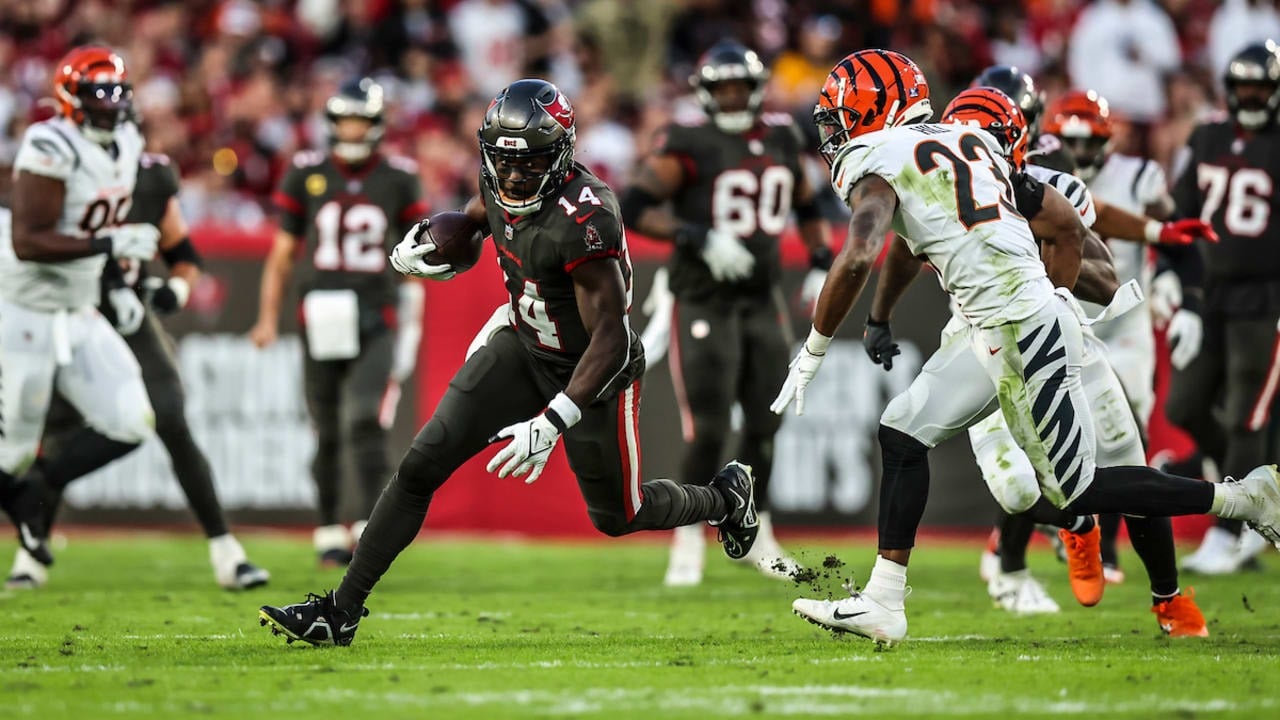
That branding arrived first, seven months before ground broke in earnest on the new stadium's most memorable feature. At the April 1997 press conference, the Buccaneers introduced a redesigned color scheme built around red, pewter, black and white, replacing the orange and white of the creamsicle years. The new primary logo dropped Bucco Bruce entirely in favor of a tattered pirate flag: a skull with crossed swords behind it, in the tradition of the historical "Calico Jack" Jolly Roger, with the flag mounted on a staff shaped like a pirate's sword.
Where the old logo had been cartoonish and, by the 1990s, faintly embarrassing, the new one was meant to look like something an opponent should not want to face. Pirates were still the theme, the Buccaneers had always been pirates, but the tone shifted from mascot to menace.
What pewter actually is, and why it stuck
Pewter is not a color most people encounter outside of antique shops and hardware stores. It is a malleable metal alloy, traditionally made mostly of tin combined with small amounts of copper and antimony, that produces a dull, silvery-gray finish. Before 1997 it had essentially no connection to American football at all.
That is precisely what made it useful to the Buccaneers. Every other realistic option, orange, red, silver, black, was already associated with another NFL franchise or, worse, with the losing team Tampa Bay was trying to leave behind. Pewter was distinctive, unclaimed and, worn alongside red and black, gave the uniforms a harder, more armored look than the bright creamsicle scheme ever could.
The word did more than describe a jersey. It became shorthand for the whole reset: pewter as the color of the team Tampa Bay was trying to become, rather than the one it had been. Bucs media and fan culture picked up the word quickly and never let go of it. A prominent independent Buccaneers news outlet built its entire brand around the term. Decades later, when the team has cycled through several uniform tweaks, pewter has remained the one constant fans reach for when they talk about what a "real" Buccaneers look is supposed to be.
1997: the rebrand meets a real football team
The new uniforms debuted for the 1997 season, and for the first time in years, the team wearing them actually played like it belonged in them. Tampa Bay opened 5-0, a start nobody outside the building had predicted, and finished the regular season 10-6, its best record since the franchise's early years. It was the Buccaneers' first playoff berth since the strike-shortened 1982 season, ending the longest active postseason drought in the league at the time.
In the wild card round, Tampa Bay beat the Detroit Lions 20-10, the franchise's first playoff win in fifteen years. The following week the Buccaneers lost 21-7 at Green Bay in the divisional round, falling to a Packers team that would go on to reach that year's Super Bowl. Tampa Bay's season ended one round short of the NFC Championship Game, but the larger point had already been made. A franchise that had been an NFL punchline for most of two decades had a winning record, a playoff win and a defense that was becoming the foundation for something bigger.
Why the timing mattered
None of this happened by accident, and none of it happened in isolation. Glazer's purchase gave the franchise a stable, well-capitalized ownership group for the first time in years. That ownership hired Dungy, who spent his first season building a defense that would not fully show its teeth until years later, when Sapp, Brooks, Lynch, Ronde Barber and Simeon Rice anchored a unit that won the franchise's first Super Bowl. County voters funded a stadium that gave the team modern revenue streams and a home suited to a franchise on the rise. And the front office, sensing the moment, retired a losing brand and replaced it with one built to match the ambition.
Bucco Bruce had watched the Buccaneers lose more football games than almost any other team in the league. The flag and the skull got to watch them start winning almost immediately. Fans in Tampa noticed the timing then, and Bucs fans who never set foot in Florida still repeat the color today, because it is the word this franchise chose the exact moment it decided to stop being a joke.
No comments yet. Start the conversation.