
 Panthers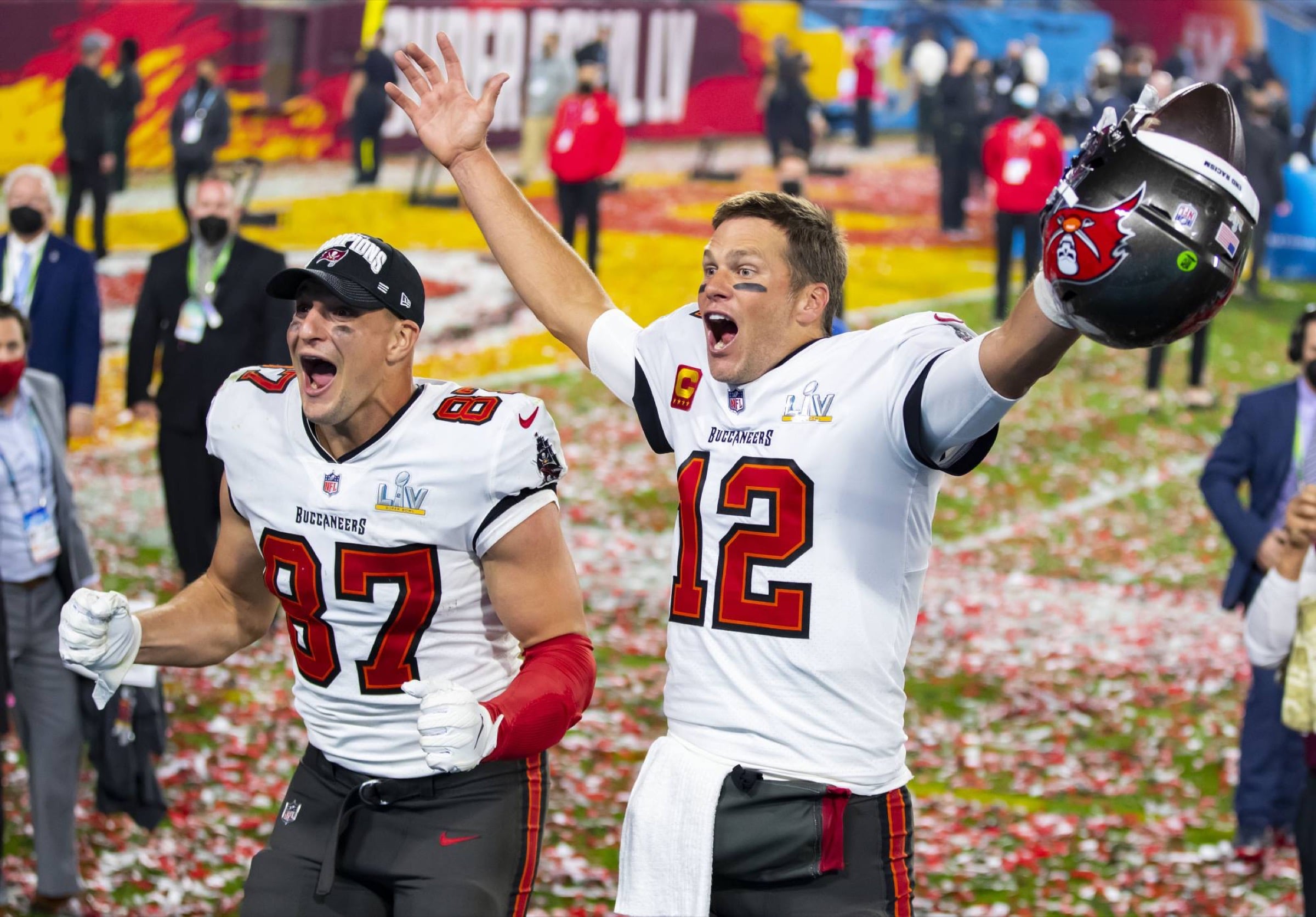
On March 17, 2020, Tom Brady announced he was leaving the New England Patriots after 20 seasons. Three days later, on March 20, the Buccaneers made it official: Brady was coming to Tampa Bay on a two-year deal reported at $50 million, fully guaranteed, with up to $9 million more in incentives and language that ruled out a franchise tag or trade. A quarterback with six Super Bowl rings had just picked a team that had not made the playoffs since 2007.
Three seasons later, the Buccaneers had a franchise-record win total, a Super Bowl trophy won in their own stadium, and an ending that arrived faster than anyone in Tampa expected.
Why Tampa Bay, why Bruce Arians
Head coach Bruce Arians had been hired on January 8, 2019, coming out of retirement on a four-year contract to rebuild a Buccaneers team that had gone 7-9 the year before under Dirk Koetter. Arians had a track record of getting career years out of veteran quarterbacks, and his arrival, along with an offense already featuring Mike Evans and Chris Godwin at receiver, was part of what made Tampa Bay a plausible destination once Brady decided to leave New England.
The fit worked immediately in the standings. Tampa Bay improved from 7-9 in 2019 to 11-5 in Brady's first season, though the more meaningful improvement came in January.
Building a roster around a 42-year-old
Brady did not arrive alone for long. Two days before the 2020 draft, the Patriots traded tight end Rob Gronkowski, Brady's longtime New England target who had spent a year in retirement, to Tampa Bay for a fourth-round pick. Gronkowski un-retired to rejoin his old quarterback on a one-year, $10 million deal.
Midway through the 2020 season, the Buccaneers added another familiar name: wide receiver Antonio Brown, who had played only one game in 2019 amid off-field turmoil elsewhere in the league. Brown signed with Tampa Bay and appeared in 11 games down the stretch, giving Brady an increasingly loaded group of targets heading into the postseason.
A shaky start, then a run nobody saw coming
Brady's Tampa Bay debut did not open smoothly. The Buccaneers lost their season opener to the division-rival New Orleans Saints 34-23, then needed a rally from a 17-point deficit to beat the Chargers a few weeks later. There were flashes of what the offense could become, including a 38-10 demolition of an undefeated Green Bay team in October and a 45-20 win at Las Vegas, but November brought a rough patch: three losses in four games, including a 38-3 blowout loss at home to New Orleans.
The turnaround started after the Week 13 bye. Tampa Bay did not lose again that season, closing the regular season with a comeback win over Atlanta and a 47-7 rout of Detroit that clinched a playoff spot and ended the franchise's postseason drought dating back to 2007. The Buccaneers then won three straight games on the road in the playoffs, beating Washington, New Orleans, and the top-seeded Green Bay Packers in the NFC Championship Game, to reach a Super Bowl they would not have to leave home for.
Super Bowl LV: a title in their own building
Tampa Bay went 5-1 in the 2020 playoffs, capped by a run to Super Bowl LV on February 7, 2021, at Raymond James Stadium. It was the first time in NFL history a team played a Super Bowl in its own home stadium.
The Buccaneers beat the Kansas City Chiefs, the defending champions, 31-9. Brady completed 21 of 29 passes for 201 yards and three touchdowns, two to Gronkowski and one to Brown, and was named Super Bowl MVP for the fifth time in his career at age 43, the oldest quarterback ever to win the game. It gave him a seventh championship, adding to a resume that already stood alone in NFL history, in his very first season away from New England.
The game itself carried the marks of its moment. Pandemic capacity limits held attendance to 24,835, the smallest crowd ever at a Super Bowl, with roughly 7,500 vaccinated healthcare workers from the Tampa and central Florida region seated among the paying fans and 30,000 cardboard cutouts filling the rest of Raymond James Stadium.
2021: a franchise-record season, then Los Angeles
Both Gronkowski and Brown returned in 2021, Gronkowski on a one-year deal worth a reported $8 million base with incentives, Brown re-signing that April as part of the team's push to keep its championship roster together. The result was the best regular season in franchise history: a 13-4 record, the NFC South title, and the number 2 seed in the NFC playoffs.
Brady's individual numbers matched the team's success. He set what was then a career high in passing yards for the season and led the NFL in both passing yards and touchdown passes, while also setting a personal season record for completions.
The season also had a jarring coda before the playoffs even began. In Week 17, on January 2, 2022, against the New York Jets, wide receiver Antonio Brown removed his jersey and pads on the sideline and left the field for the locker room mid-game after Arians told him to go in. Arians said afterward that Brown was "no longer a Buc," and the team released him days later. Brown was not claimed by any other team for the rest of the season.
The playoff run started well despite that distraction. Tampa Bay beat the Philadelphia Eagles 31-15 in the Wild Card round. Then, in the Divisional round, the Buccaneers ran into the Los Angeles Rams, the team that would go on to win that year's Super Bowl. Down 27-3 in the second half, Tampa Bay staged a furious comeback, tying the game 27-27 with 42 seconds left on a Leonard Fournette fourth-down touchdown run. It was not enough. Rams quarterback Matthew Stafford hit Cooper Kupp for a 44-yard gain in the closing seconds, and kicker Matt Gay won it for Los Angeles with a 30-yard field goal, 30-27. The title defense was over.
Retirement, then forty days later
On February 1, 2022, Brady announced his retirement at age 44, closing out 22 NFL seasons split between New England and Tampa Bay. The announcement cited, among other things, wanting more time with his family.
It did not last. On March 13, 2022, Brady announced on social media that he was returning for a 23rd season, still with Tampa Bay, describing unfinished business on the field. The reversal came a little over a month after the retirement announcement.
Behind the scenes, the Buccaneers were also changing coaches. On March 31, 2022, Bruce Arians stepped down as head coach to take a senior football consultant role within the organization, and defensive coordinator Todd Bowles was promoted to replace him. Arians had said winning a Super Bowl at home had fulfilled what he set out to do as a head coach, and the timing meant Bowles inherited a roster built to contend rather than one that needed rebuilding.
2022: a losing record that still won a division
The 2022 season became, statistically, the hardest of Brady's career. The Buccaneers finished 8-9, the only losing record of his career as a starter. Even so, Tampa Bay won the NFC South, the first time in franchise history the Buccaneers had won the division in consecutive seasons.
Brady kept adding to his own ledger even as the win total dropped. In his final season, he completed 490 of 733 passes, breaking his own single-season franchise record for completions and attempts, both set the year before at 485 of 719.
Tampa Bay's season, and Brady's career, ended in the Wild Card round on January 16, 2023, at home against the Dallas Cowboys. Dallas won 31-14. Just over two weeks later, on February 1, 2023, exactly one year after his first retirement announcement, Brady announced he was retiring again, this time for good. The Cowboys loss stands as the final game of his NFL career.
The records that changed hands
Brady's three seasons in Tampa did more than add a Super Bowl to his career total. By the numbers available at time of writing, he finished his career as the NFL's all-time leader in career passing yards (89,214) and career touchdown passes (649), records he held from partway through the 2021 season onward, having overtaken previous leader Drew Brees.
For the Buccaneers specifically, the 13-4 mark in 2021 stands as the best regular-season record in franchise history, and the Super Bowl LV title remains the franchise's second championship, its first since the 2002 season covered elsewhere on this site.
Season | Record | Result |
|---|---|---|
2020 | 11-5 | Won Super Bowl LV (beat Kansas City 31-9) |
2021 | 13-4 | Lost Divisional round (Los Angeles Rams, 27-30) |
2022 | 8-9 | Lost Wild Card round (Dallas Cowboys, 14-31) |
What three years bought the franchise
Brady's arrival did not just deliver a trophy. It ended a 13-year playoff win drought, gave Tampa Bay its best regular season ever, and put the Buccaneers on national television schedules for three straight years in a way the franchise had rarely experienced outside the Gruden era. The 2022 season showed that even Brady could not indefinitely outrun the calendar, and the Cowboys loss was a quieter exit than the confetti in his first year suggested was possible.
For a fan base that spent decades explaining Tampa Bay to the rest of the football world, three Brady seasons did something the record books cannot fully capture: they made "the Buccaneers" a team international audiences already recognized before the next game even kicked off.
No comments yet. Start the conversation.