
 Panthers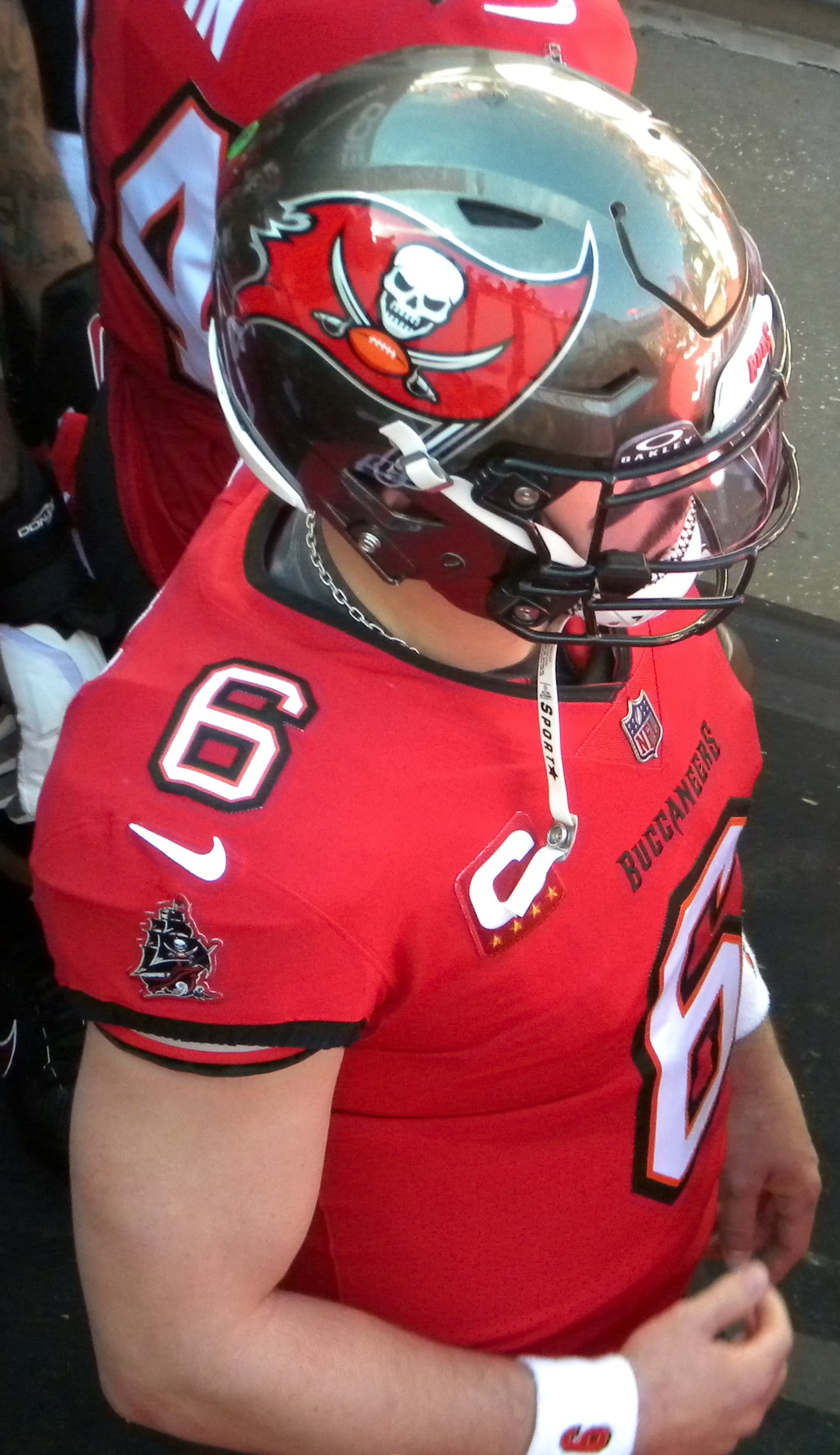
Todd Bowles was asked on SiriusXM NFL Radio this week what makes Baker Mayfield different from other quarterbacks he has coached. His answer had nothing to do with arm strength or footwork. There is no room in the building, Bowles said, where Mayfield is not welcome, offense or defense. "He has a way of getting everybody going without getting on their nerves," Bowles said, "and he has a way of getting on people's nerves and getting them going." Asked separately how the team fares without him, Bowles did not hedge: "I don't think we can go far without him."
That is about as strong an endorsement as a head coach gives a player in the week before a season opener. It sits awkwardly next to the other Baker Mayfield story of the summer: he wanted a contract extension, did not get the one he wanted, and said so publicly. For BucsWorld's full breakdown of Mayfield's three seasons in Tampa and what the position looks like heading into 2026, see Baker Mayfield and the state of the quarterback position. This piece is about the other half of the story, the leadership and the money, and how the Buccaneers are betting they can keep both without a new deal in place yet.
"Not appealing whatsoever"
Mayfield set his own deadline for a new contract: the start of training camp. When talks did not produce one, he said so at a press conference on Thursday, July 30. He described the Buccaneers' offers, reported at two years with a total value just above $100 million, as "not presented with an offer that's appealing whatsoever," and said he felt "disrespected a little bit" and "undervalued after thinking you've earned it." He then shut down negotiations for the rest of the year.
Bowles was asked about those comments the following week and declined to engage. "I didn't have a reaction," he said. "He had a few things to say. He said it. We're all about ball today, and we moved on." General manager Jason Licht struck a similar note in his pre-season press conference in early September, saying there were "no immediate plans to reopen contract talks" and that the front office was focused on the opener at Cincinnati. He did add that he remains "very optimistic" about keeping Mayfield beyond 2026, calling him someone who "wants to prove to us that he is the franchise quarterback that we said that he was."
What Mayfield is actually playing on
Mayfield's existing deal is a three year, $100 million extension signed on March 10, 2024, that runs through the 2026 season, the last guaranteed year of the contract he took after arriving in Tampa in 2023 on a one-year "prove it" deal. According to Over The Cap and Spotrac, his 2026 cap hit is just under $40 million, with the bulk of it now guaranteed. That guarantee is not new: in July 2025, the Buccaneers reworked the back end of the deal, converting $30 million of what had been an unsecured 2026 base salary into a guaranteed roster bonus, a signal at the time that the front office intended to build around him. It did not, on its own, produce the multi-year extension Mayfield wanted a year later.
Unless a new deal gets done during the season, which is rare around the league, Mayfield plays out 2026 and is scheduled to hit free agency in March 2027.
Leadership that shows up on tape and in the building
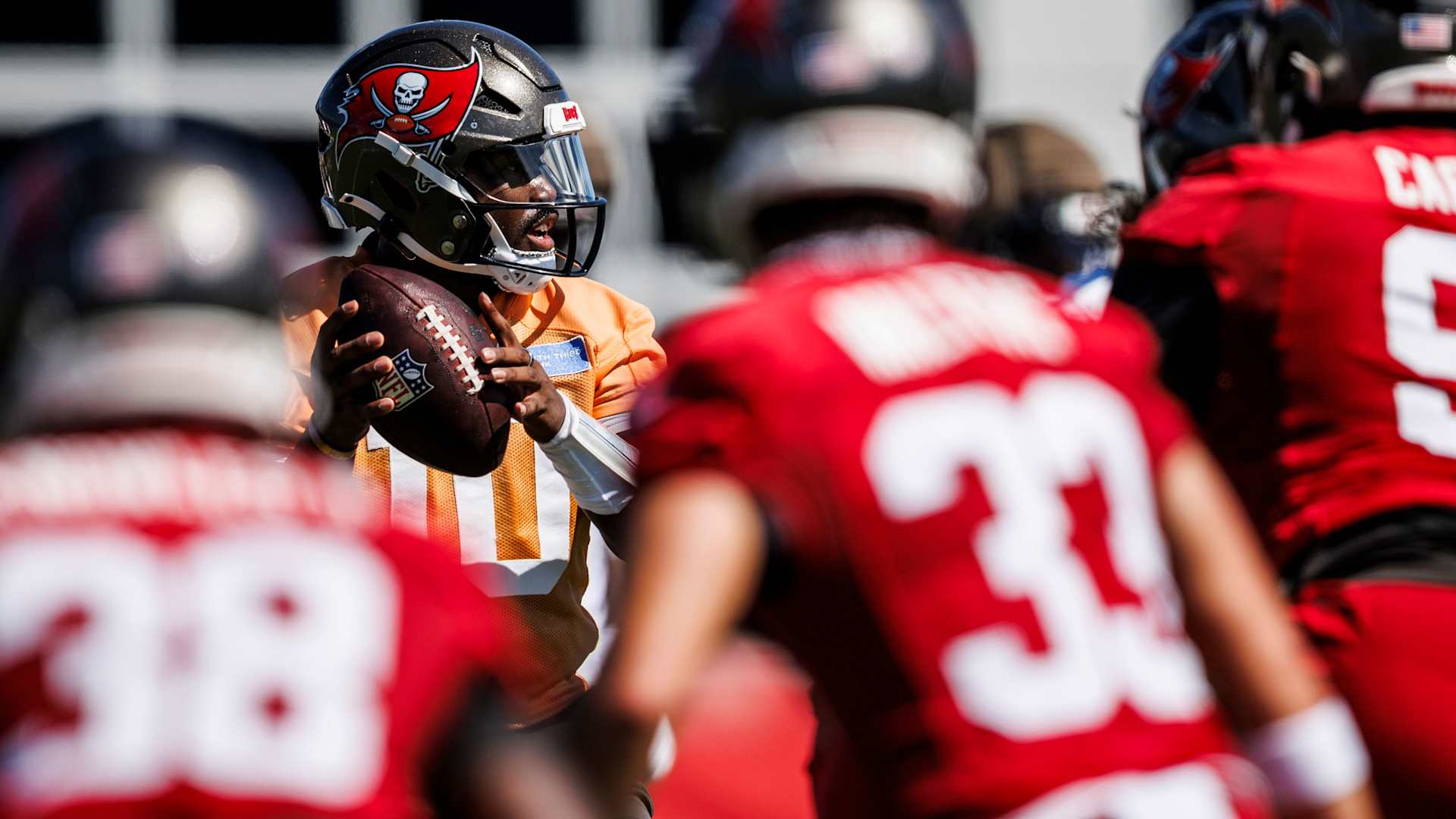
Bowles' comment about Mayfield working every room in the building is not just praise for a press conference. It matches how Mayfield describes his own job. "You have to know your job and do it well," he said in an interview last season, "but also empower the guys to feel like they can go above and beyond. That is a huge thing in leadership, is instilling confidence. It is not a false confidence, though." He pointed to a specific moment as an example: a rookie receiver making an in-route adjustment on a touchdown catch against San Francisco, the kind of on-field trust that only develops through repetition and belief, not just talent.
Mayfield has been a team captain in each of his three seasons in Tampa, voted in by teammates rather than appointed by the staff, and beat writers expect him to keep the armband in 2026. With Mike Evans now in San Francisco and Lavonte David retired, the two most obvious veteran leadership voices from the 2020 Super Bowl roster are gone. Bowles' point about Mayfield crossing into defensive meeting rooms matters more this year than it would have two years ago, when Evans and David filled that role from their own side of the ball.
The market he is measuring himself against
Mayfield's ask, reported around $50 million per year, is not an outlier for a quarterback with his recent numbers. Trevor Lawrence signed a five year, $275 million extension with Jacksonville worth $55 million annually. Brock Purdy got five years and $265 million from San Francisco in May 2025, a $53 million average. Jordan Love sits at the same $55 million mark in Green Bay. Those are all deals for quarterbacks a tier or so below the very top of the market, which is exactly the tier Mayfield is arguing he belongs in after back-to-back Pro Bowl-caliber seasons in 2023 and 2024.
The more useful comparison for Tampa Bay's specific situation might be Daniel Jones, a former high pick who bounced from one franchise, restored his value, and this offseason took a two year, $88 million deal from the Colts rather than a longer commitment. That is close to the two-year structure the Buccaneers reportedly offered Mayfield, just at a lower rate and, more pointedly, coming off a serious injury for Jones rather than a down statistical year like Mayfield's 2025.
Where this goes
Three paths sit in front of the Buccaneers, and none of them requires a resolution before Sunday's opener at Cincinnati.
The first is an in-season extension, which happens occasionally around the league but is far from the norm and something Licht has already downplayed for now. The second is the franchise tag next offseason, which would carry a projected cap charge of roughly $50 million for 2027, a number BucsWorld breaks down in the context of the team's broader cap picture in Tampa Bay's 2027 salary cap, explained. Tagging Mayfield would keep him for one more year at a price close to what he is already asking for on a long-term deal, without the multi-year commitment either side has been unable to agree on. The third option is simplest: let the season play out, revisit talks in the offseason with a full 2026 sample to negotiate from, and let performance settle the argument that numbers on a page have not.
None of that changes what Bowles was describing on the radio this week. A locker room does not organize itself around a spreadsheet. It organizes around who people listen to, and by every account from inside the building, that is still Mayfield, contract or no contract.
No comments yet. Start the conversation.