
 Panthers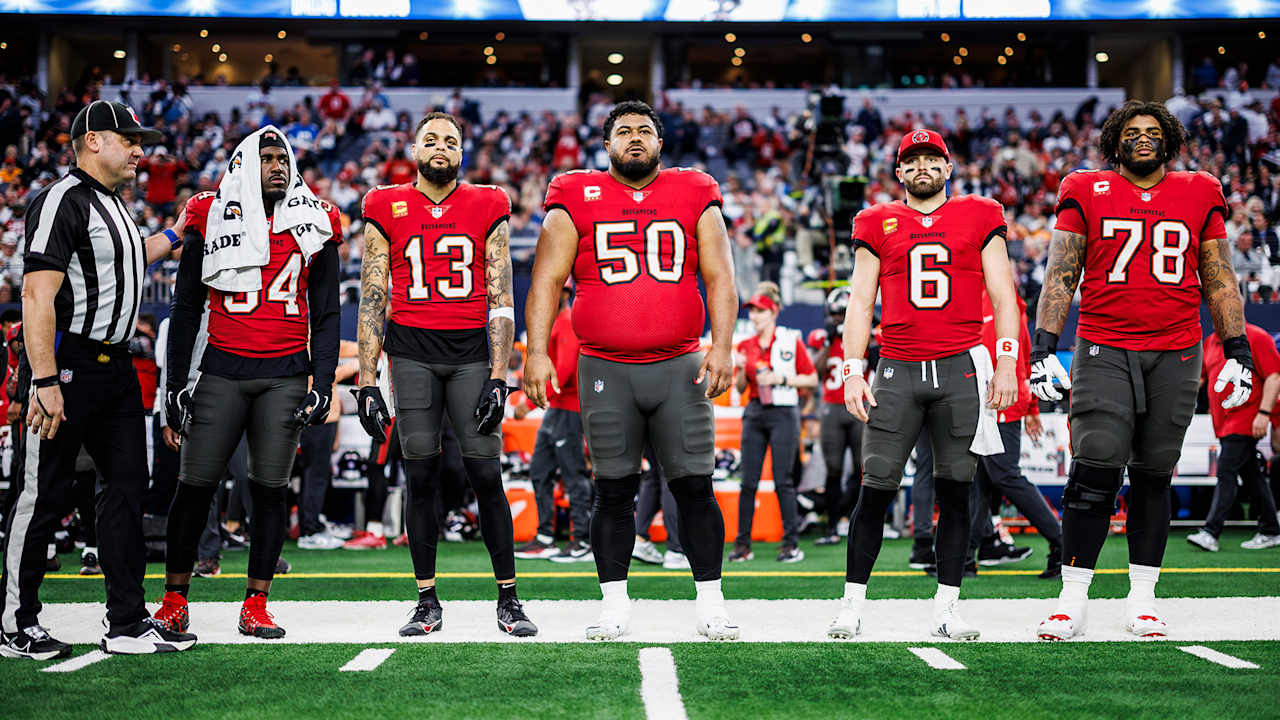
Baker Mayfield scored 267.9 fantasy points in the 2025 season in a standard PPR league, more than the next two Buccaneers combined. That single number tells a real story about how Tampa Bay's offense actually worked last year: through a quarterback who started all 17 games, behind a supporting cast that rarely did.
The Buccaneers went 8-9 in 2025, and their fantasy production over those 17 games reads like a team that never settled on one clear supporting star. A rookie receiver became the offense's best weapon by midseason. Three different running backs shared a job. Two accomplished names on the roster spent large stretches unavailable. Below is the full season scoreboard, built from Tampa Bay's 17 ESPN box scores, followed by what each line means.
The 2025 season scoreboard
# | Player | Pos | Games | Season stat line | PPR | Half | Std |
|---|---|---|---|---|---|---|---|
1 | Baker Mayfield | QB | 17 | 343/543 for 3693 yds, 26 TD, 11 INT; 55 carries for 382 yds, 1 TD; 3 fumbles lost | 267.9 | 267.9 | 267.9 |
2 | WR | 17 | 2 carries for 9 yds, 0 TD; 63 rec (127 targets) for 938 yds, 6 TD | 193.7 | 162.2 | 130.7 | |
3 | Rachaad White | RB | 17 | 132 carries for 572 yds, 4 TD; 40 rec (45 targets) for 218 yds, 0 TD | 143.0 | 123.0 | 103.0 |
4 | RB | 10 | 173 carries for 588 yds, 1 TD; 30 rec (35 targets) for 277 yds, 3 TD; 1 fumbles lost | 138.5 | 123.5 | 108.5 | |
5 | TE | 14 | 59 rec (78 targets) for 572 yds, 1 TD | 122.2 | 92.7 | 63.2 | |
6 | PK | 17 | 32/38 FG (long 65), 32/33 XP | 122.0 | 122.0 | 122.0 | |
7 | WR | 12 | 7 carries for 22 yds, 0 TD; 28 rec (41 targets) for 322 yds, 5 TD | 92.4 | 78.4 | 64.4 | |
8 | RB | 13 | 84 carries for 320 yds, 7 TD; 8 rec (11 targets) for 34 yds, 1 TD | 91.4 | 87.4 | 83.4 | |
9 | Mike Evans | WR | 7 | 30 rec (57 targets) for 368 yds, 3 TD | 84.8 | 69.8 | 54.8 |
10 | Sterling Shepard | WR | 13 | 4 carries for 19 yds, 0 TD; 39 rec (53 targets) for 371 yds, 1 TD; 1 fumbles lost | 82.0 | 62.5 | 43.0 |
11 | WR | 9 | 33 rec (51 targets) for 360 yds, 2 TD | 81.0 | 64.5 | 48.0 | |
12 | WR | 4 | 1 carries for 1 yds, 0 TD; 12 rec (15 targets) for 178 yds, 0 TD | 29.9 | 23.9 | 17.9 | |
13 | WR | 3 | 2 carries for 13 yds, 0 TD; 4 rec (5 targets) for 64 yds, 1 TD | 17.7 | 15.7 | 13.7 | |
14 | Ryan Miller | WR | 2 | 2 rec (2 targets) for 34 yds, 1 TD | 11.4 | 10.4 | 9.4 |
15 | Devin Culp | TE | 1 | 1 rec (1 targets) for 6 yds, 1 TD | 7.6 | 7.1 | 6.6 |
Buccaneers D/ST | D/ST | 17 | 37 sacks, 13 INT, 10 FR, 4 TD, 411 points allowed | 110.0 | 110.0 | 110.0 |
"Games" here means games in which a player scored fantasy points, not necessarily games active on the roster. Full totals and every player down to single-digit-point contributors are in our underlying data file.
Mayfield: a QB1 on volume alone
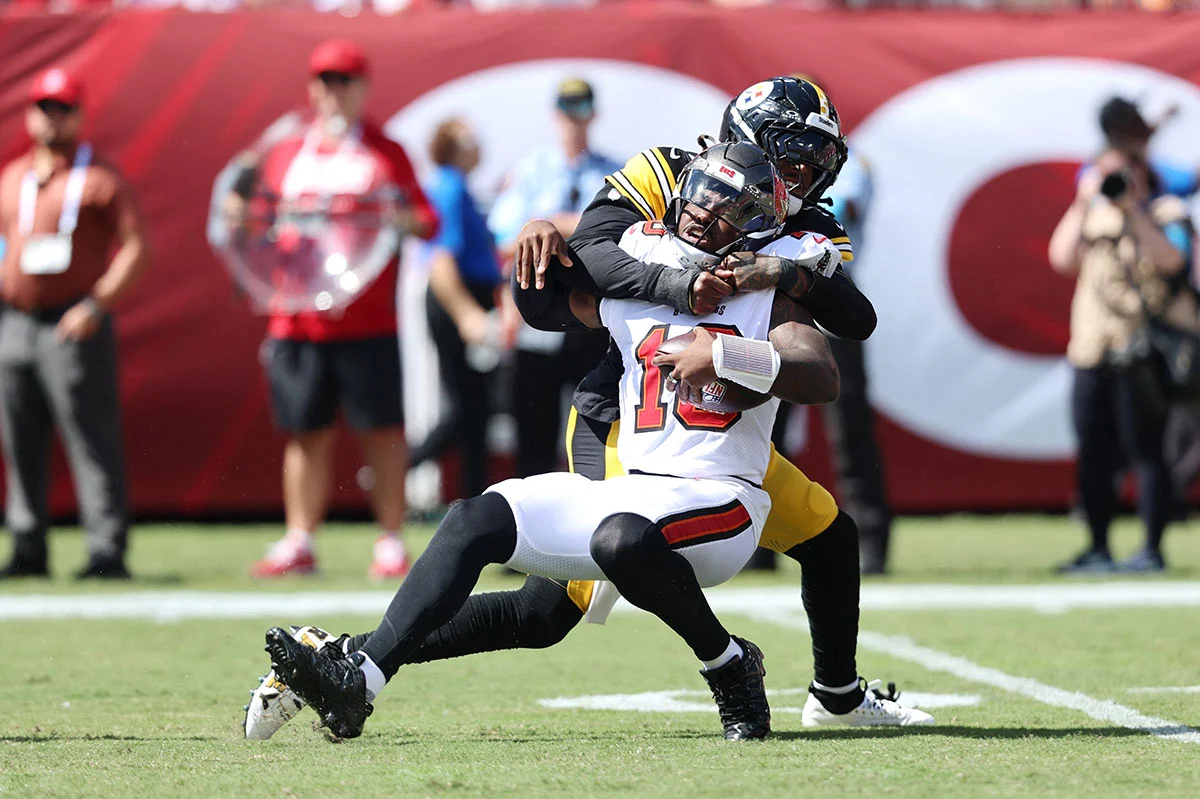
Mayfield's 267.9 PPR points came from throwing 543 times, the platform for every other number in this table. He finished with 3,693 passing yards and 26 touchdowns against 11 interceptions, plus 382 rushing yards and a score on 55 carries. His 15.8 PPR points per game over a full 17-game slate is the kind of QB1 floor that comes from opportunity as much as efficiency: he was on the field for every offensive snap the Buccaneers played.
Egbuka's rookie season was the offense's best story
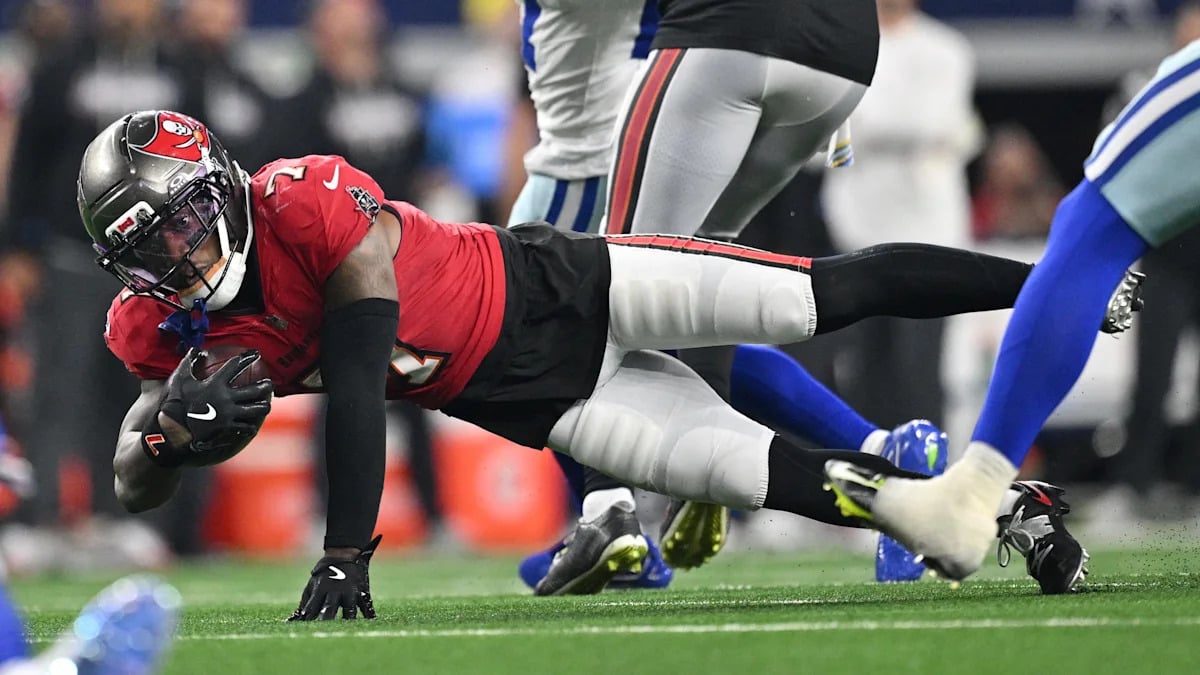
Emeka Egbuka's 193.7 PPR points ranked second on the team, and he did it as a rookie. He was targeted 127 times, more than any other Buccaneer, and turned that volume into 63 receptions, 938 yards and 6 touchdowns across all 17 games. At 11.4 PPR points per game, he was Tampa Bay's most consistent weekly weapon not named Mayfield, built while the receiver room around him kept losing bodies to injury.
A running back job split three ways
No single back carried the workload. White, Irving and Tucker split it. Rachaad White led the position in total points (143.0) by playing every game, but his per-game rate of 8.4 PPR points was the lowest of the three. Bucky Irving is the more interesting line: he scored fantasy points in only 10 of Tampa Bay's 17 games, yet still finished with 138.5 PPR points, a rate of 13.8 per game that outpaced both White and Egbuka. RotoWire and CBS Sports both reported Irving was dealing with a shoulder injury, described as a subluxation, alongside a foot problem, that cost him time in the middle of the season and eventually required offseason surgery. Sean Tucker, the third back, turned a smaller workload (84 carries, 8 catches) into 7 rushing touchdowns and 91.4 PPR points, a touchdown rate no other Buccaneer approached relative to touches.
Otton, the position's quiet constant
Cade Otton was on the field for 14 games and produced 122.2 PPR points on 59 receptions for 572 yards, numbers that place him ahead of every wide receiver on the roster except Egbuka. In half-PPR he still ranks fifth on the team overall (92.7), and in standard scoring his lack of touchdowns (just 1) drops him to 63.2, a clear sign of how much reception volume matters to a tight end's fantasy value.
The receivers who missed time, and Tez Johnson's touchdowns
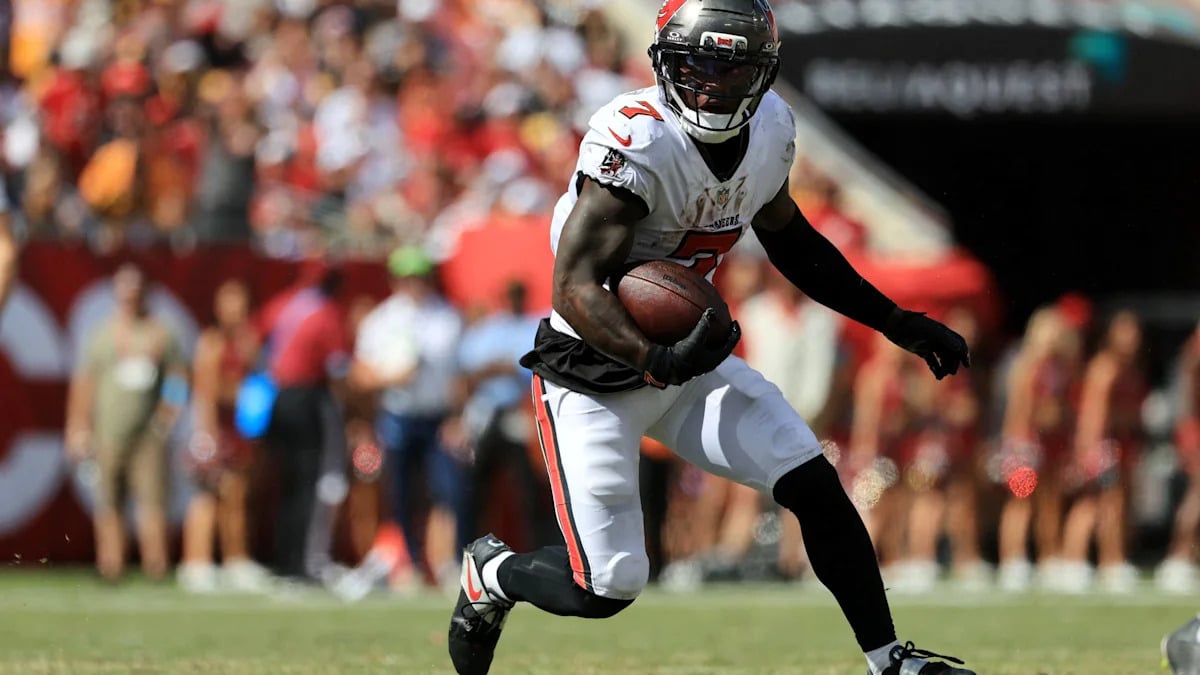
Mike Evans, Chris Godwin Jr. and Jalen McMillan combined for 245.7 PPR points across a group that rarely had all three healthy at once. Evans scored fantasy points in 7 of the 17 games; as covered in our piece on life after Mike Evans, a hamstring injury, a concussion and a broken clavicle limited his 2025 season before he signed with the San Francisco 49ers in March 2026. Godwin scored in 9 games while working back from the ankle injury that ended his 2024 season early. McMillan appeared in just 4, following a broken bone in his neck suffered in a 2025 preseason collision. Into that gap stepped Tez Johnson, whose 5 receiving touchdowns on only 28 catches gave him more scores than Godwin and Shepard combined, one of the roster's more efficient options at 7.7 PPR points per game.
The kicker and the defense
Chase McLaughlin was worth exactly as much as Otton in PPR scoring, 122.0 points, on a 32-for-38 season on field goals with a long of 65 yards and 32 of 33 extra points made. The Buccaneers defense, scored here as one unit, put up 110.0 points on 37 sacks, 13 interceptions, 10 fumble recoveries and 4 defensive or special teams touchdowns, output that would rank comfortably inside the top half of this table as an individual player.
What it means for 2026 drafts and waivers
Egbuka's target share and full-season availability make him the safest bet in this room to carry over as a WR1, assuming health. Irving's 13.8 PPR points per game is the more useful number than his 138.5 season total for anyone drafting him this summer, since a full healthy season at that rate would outproduce White's 2025 total, though last year's shoulder issue is a real caveat until he proves otherwise on the field. Godwin and McMillan are talent bets more than health bets: both have shown WR2-or-better ceilings in healthy seasons, and both missed significant time in 2025. None of that guarantees a 2026 workload, which depends on coaching decisions and health news not yet in.
How we score
These totals use standard fantasy scoring: passing at 0.04 points per yard, 4 per touchdown, -2 per interception; rushing and receiving at 0.1 points per yard, 6 per touchdown; receptions worth 1.0 in PPR, 0.5 in half-PPR, 0 in standard; a lost fumble at -2; a return touchdown at 6; kickers at 3 points per field goal and 1 per extra point; and the defense/special teams unit scored on sacks, interceptions, fumble recoveries, touchdowns and a points-allowed tier. Two-point conversions are not counted, since they are not separately tracked in the box score data used here, and field goal distance bonuses are not applied.
No comments yet. Start the conversation.