
 Panthers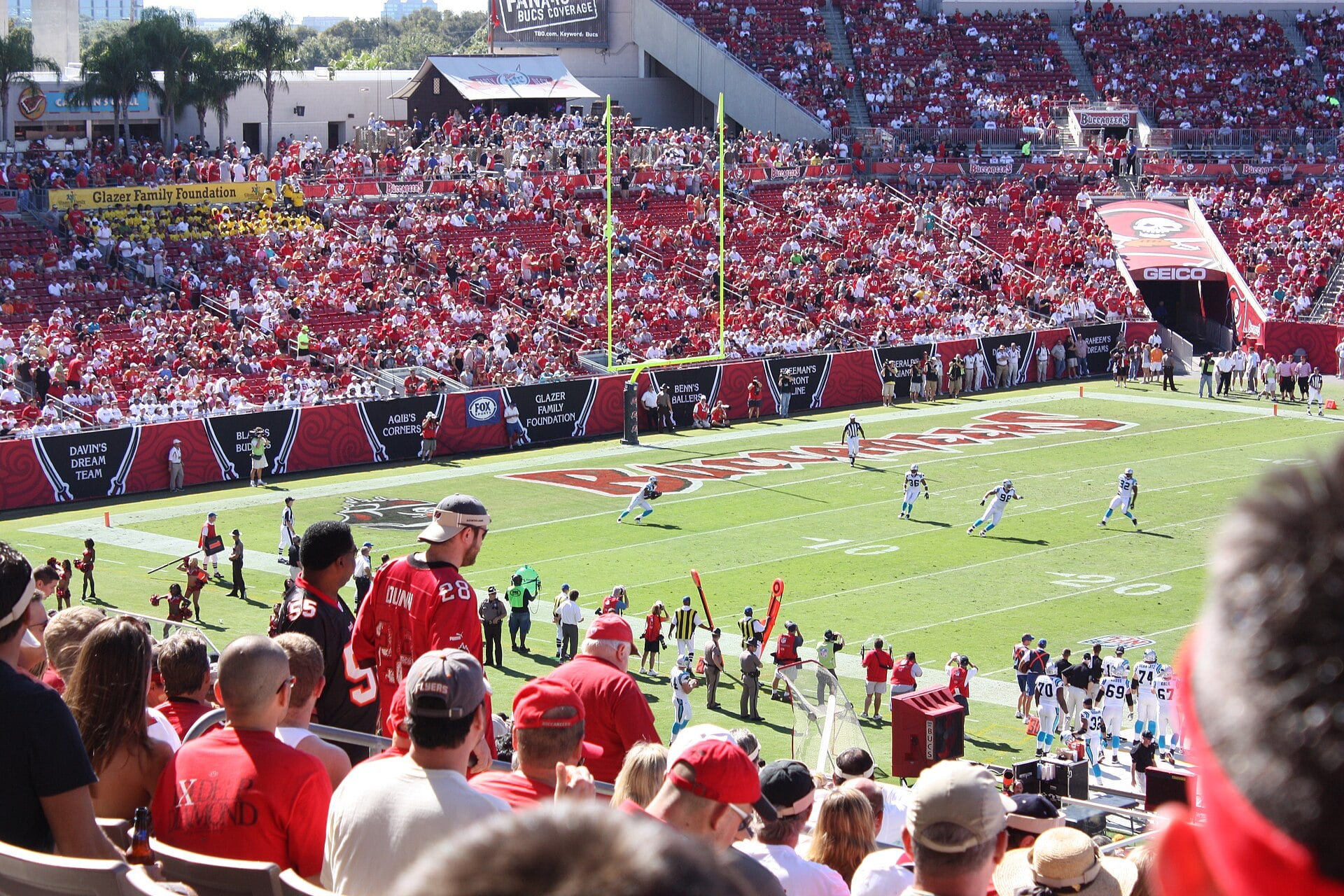
Three teams finished the 2025 NFC South season with the exact same record, 8-9, and only one of them got to keep the division title. Carolina won it on a tiebreaker over Tampa Bay and Atlanta, ending the Buccaneers' run of four straight NFC South championships from 2021 through 2024 with a season that, on paper, was no better than the two teams that finished behind it. The fourth team, New Orleans, was not close, finishing 6-11 in Kellen Moore's first year as head coach. A division that Tampa Bay ran away with for most of the decade is now the tightest, most unsettled race in the NFL, and 2026 does not look like it will change that.
How Carolina actually won it
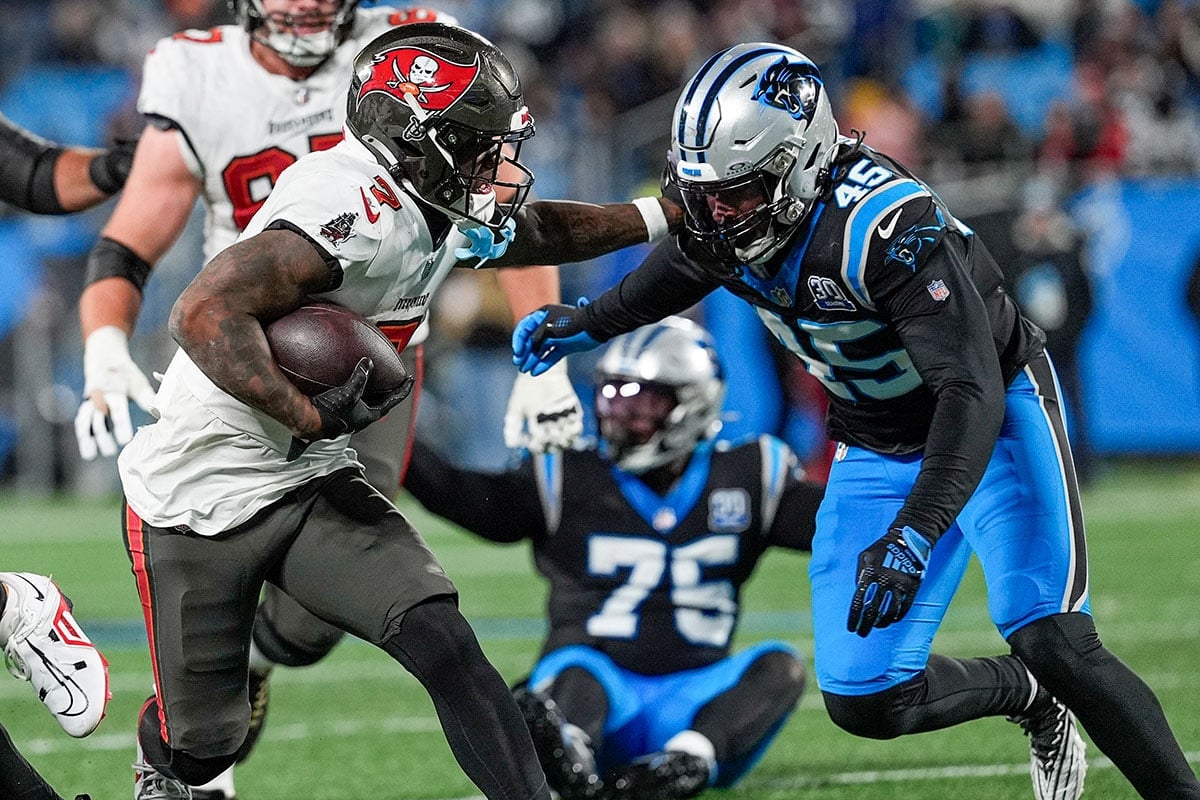
The Panthers made the playoffs for the first time since 2017 under second year head coach Dave Canales, doing it with an 8-9 record and a quarterback, Bryce Young, whose season was a genuine mix of highs and lows. Young threw for a franchise record 448 yards and three touchdowns in a Week 11 win over Atlanta, but also had multi-interception games during the year, including a three interception outing against San Francisco. Carolina beat Tampa Bay and Atlanta closely enough, and often enough, in the head to head tiebreaker math to take the division over two teams that finished with identical records, then lost in the Wild Card round to the Los Angeles Rams, 31-34, on January 12, 2026.
It was a division title that nobody would call dominant, but it was real, and it snapped Tampa Bay's streak regardless of how it happened. For Carolina, reaching the playoffs at all after finishing well under .500 for most of Canales' first season was a sign of a program trending in the right direction, even if the number in the win column did not look much different from the two teams that missed out.
Tampa Bay: the streak ends
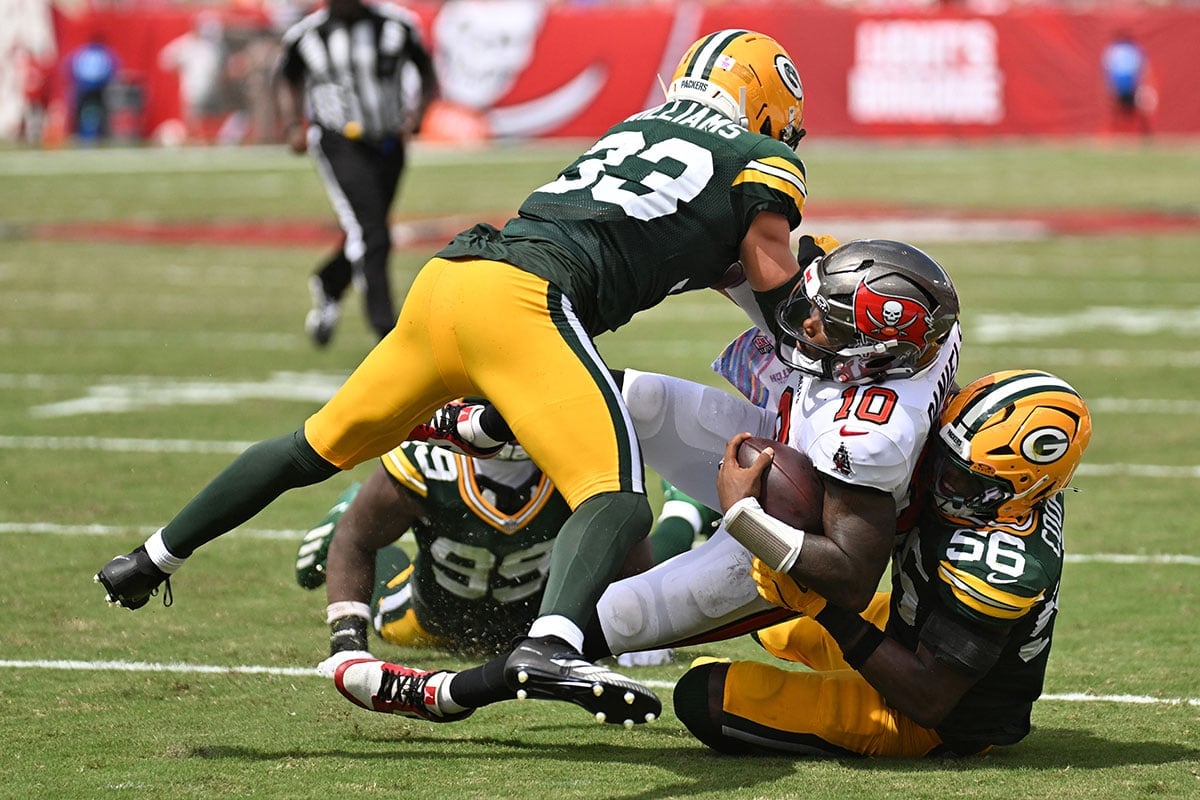
The Buccaneers' 2025 season had two very different halves. Tampa Bay opened 6-2, its best start since 2021, before losing seven of its final nine games and finishing 8-9, missing the playoffs for the first time since 2019 and posting the franchise's first losing season since 2022. Todd Bowles kept his job despite hot seat talk throughout the second half collapse, though several assistants did not survive the offseason, including offensive coordinator Josh Grizzard, who lasted one season before being replaced by Zac Robinson in January 2026.
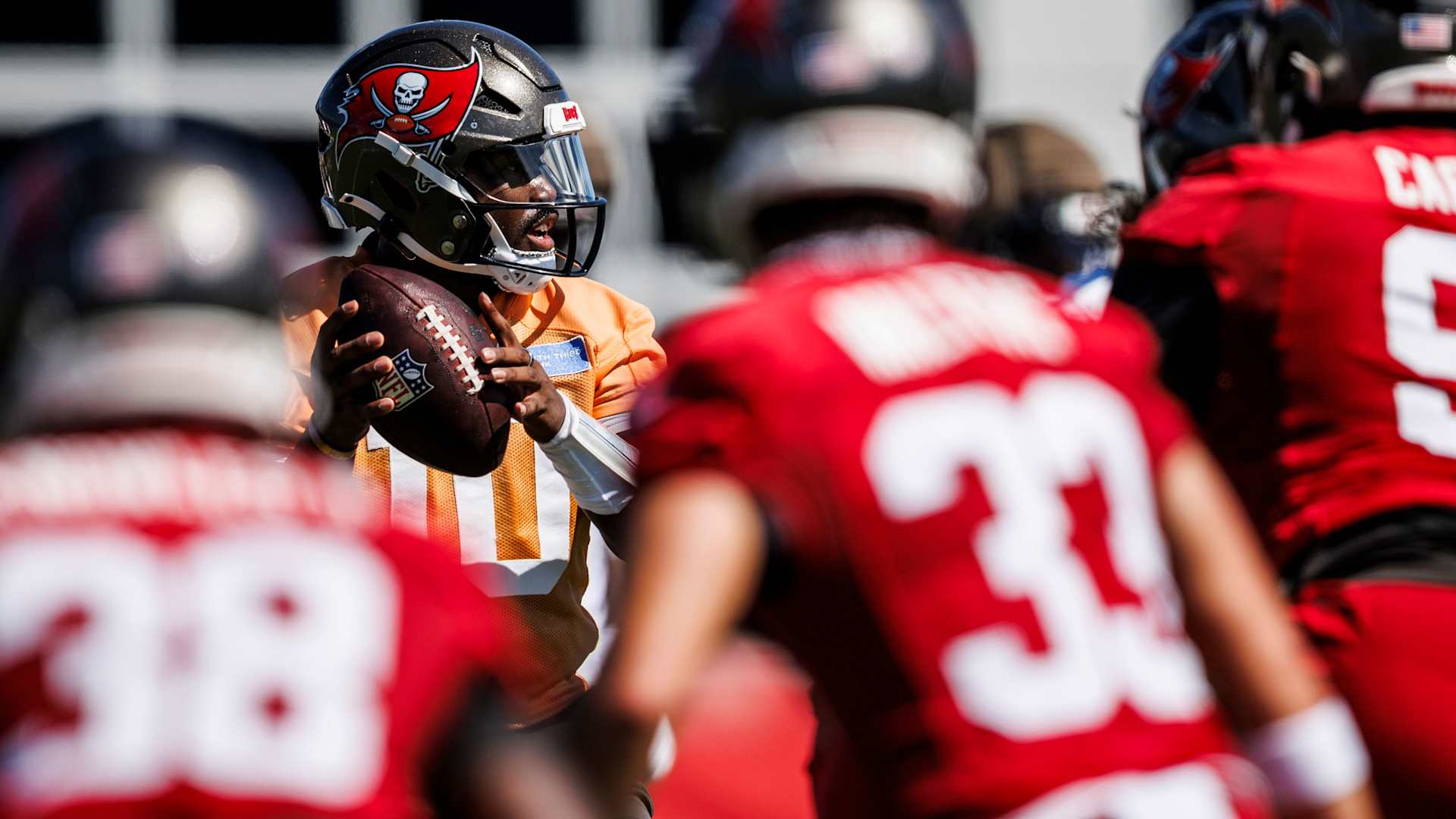
The 2026 roster looks different in ways that go beyond the coaching staff. Mike Evans, the franchise's all time leading receiver, signed with the San Francisco 49ers in March. Lavonte David retired in March after 14 seasons, all with Tampa Bay. Vita Vea, after requesting a trade over a contract dispute, instead signed a one year extension in August to stay. And the team used its first round pick, 15th overall, on Miami edge rusher Rueben Bain Jr., a clear response to a pass rush that blitzed often in 2025 without much to show for it. Baker Mayfield enters the final year of his contract without an extension in place, adding a second layer of uncertainty to a team trying to get back into the division race it used to control.
Atlanta: the biggest offseason swing
No team in the division changed its leadership more dramatically than Atlanta. The Falcons also finished 8-9, missing the playoffs for an eighth straight season, and on January 5, 2026, fired both head coach Raheem Morris and general manager Terry Fontenot. Twelve days later, Atlanta hired Kevin Stefanski, fresh off six seasons in Cleveland where he went 45-56 overall and saw the Browns collapse to 3-14 in 2024 and 5-12 in 2025 before his firing there.
The more significant change for 2026 may be at quarterback. Michael Penix Jr. is the clear starter entering the season, with Cooper Rush as his backup. Kirk Cousins, who had been competing for the job, was released in March and signed with the Las Vegas Raiders in April on a deal worth up to $172 million over five years; he was named the Raiders' starter in September, meaning the Cousins era in Atlanta is fully over rather than an open question. Atlanta added defensive back Avieon Terrell and wide receiver Zachariah Branch in the draft's early rounds, betting that a new head coach and a settled quarterback room can turn eight years of missed playoffs into something else.
New Orleans: still rebuilding, and still unsettled at quarterback
The Saints' 6-11 finish in 2025 was Kellen Moore's first season after replacing the fired Dennis Allen, and it extended New Orleans' playoff drought to five straight years. The bigger story was at quarterback. Derek Carr retired in May 2025, Spencer Rattler opened the season as the starter, and after a Week 8 benching in a loss to Tampa Bay, rookie second round pick Tyler Shough took over and started the rest of the season. Entering 2026, New Orleans has not clearly settled the job: the depth chart lists Rattler, Shough and Zach Wilson, suggesting an open competition rather than a decided starter, which is an unusual place for a team to be in September.
New Orleans spent its 2026 first round pick, eighth overall, on Arizona State receiver Jordyn Tyson, and added running back Travis Etienne and guard David Edwards in free agency. Those are real additions, but they are the moves of a team still building around whoever wins the quarterback job, not a team expecting to contend in the division immediately.
The four teams, at a glance
Team | 2025 record | Head coach | Quarterback (2026) | Biggest change for 2026 |
|---|---|---|---|---|
Carolina Panthers | 8-9 (won division) | Dave Canales (3rd season) | Bryce Young (fifth year option exercised) | New offensive coordinator Brad Idzik, new defensive coordinator Ejiro Evero |
Tampa Bay Buccaneers | 8-9 | Todd Bowles (5th season) | Baker Mayfield (final year of contract) | Mike Evans gone to San Francisco, Lavonte David retired |
Atlanta Falcons | 8-9 | Kevin Stefanski (1st season) | Michael Penix Jr. | Head coach and GM both fired and replaced |
New Orleans Saints | 6-11 | Kellen Moore (2nd season) | Open competition (Rattler, Shough, Wilson) | Rookie WR Jordyn Tyson, RB Travis Etienne added |
Schedule notes for 2026
Two NFC South teams host international games in 2026. Atlanta plays a home game against Cincinnati at the Bernabéu in Madrid on November 8, and New Orleans hosts Pittsburgh at the Stade de France outside Paris on October 25, the first regular season NFL game held in France. Tampa Bay has no international game on its 2026 schedule. All four NFC South teams share the NFC North as their common cross division opponent this year, meaning each will play the Bears, Lions, Packers and Vikings, a demanding group that includes the reigning conference finalists among them in recent seasons.
A sober assessment
There is no obvious favorite here, and that is the honest read of a division where three of four teams finished 2025 with the same record. Carolina defends its title with more continuity than anyone else, Canales entering year three with the same quarterback locked in through 2027, but Bryce Young's turnover issues are real and unresolved. Atlanta made the most dramatic change, trading an experienced but recently struggling coaching staff for Kevin Stefanski, a proven playoff coach whose own recent record in Cleveland was rough on the way out the door; how quickly Michael Penix Jr. and a new staff gel is the division's biggest unknown. Tampa Bay retooled its defensive front and kept Vita Vea, but did it while losing its all time leading receiver and its longest tenured defensive leader in the same offseason, with a quarterback playing for a new contract. New Orleans, honestly, still looks like the fourth team, not because of a lack of effort but because it enters the season without even a settled answer at quarterback.
None of that adds up to a division anyone should call good. What it adds up to is a division that stayed exactly as unpredictable as it was in the final weeks of 2025, when three teams needed a tiebreaker sheet to sort out who actually won it.
No comments yet. Start the conversation.