
 Browns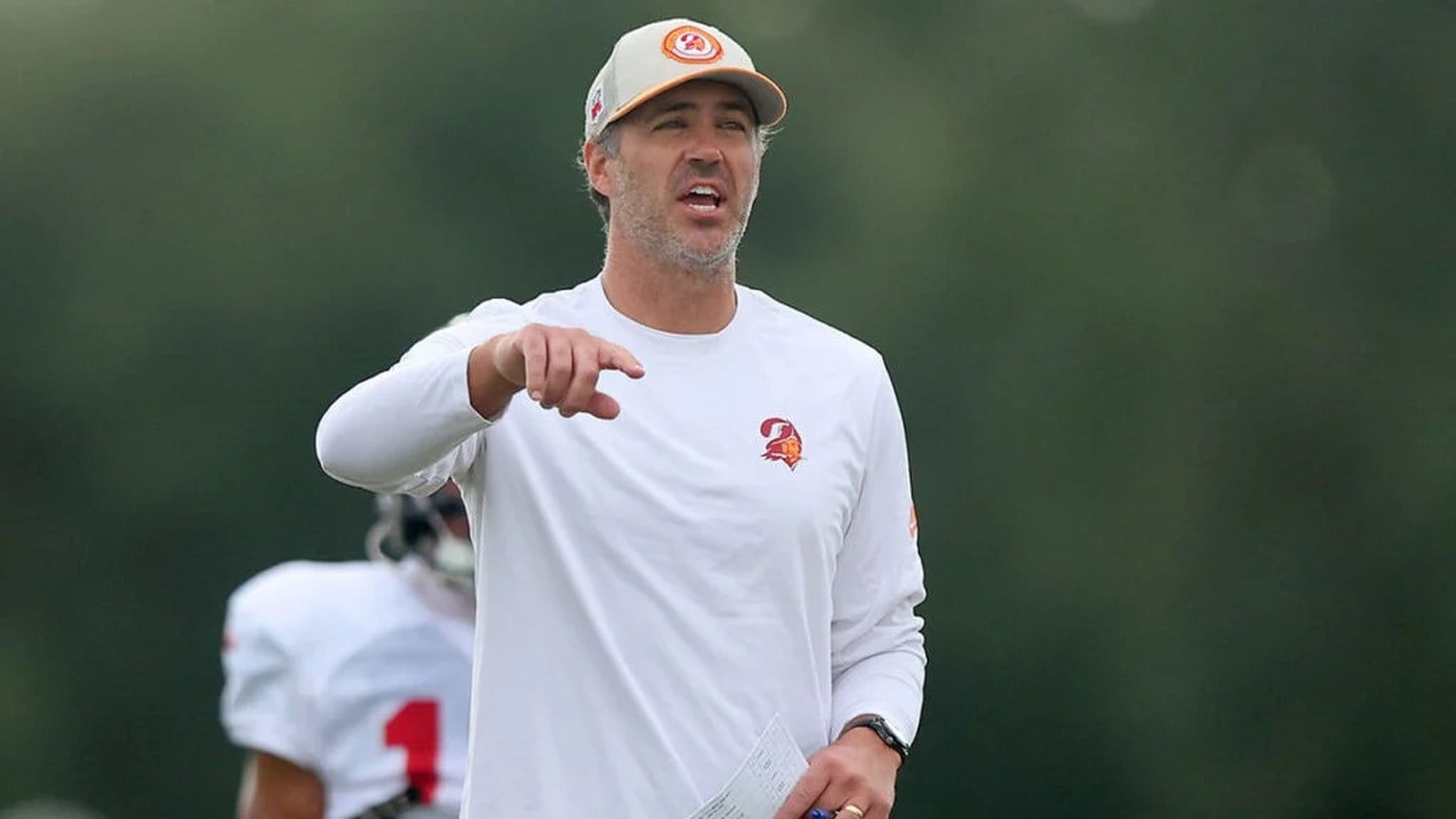
The scoreboard from Cincinnati says the Buccaneers lost 33-27 and that Baker Mayfield lost three fumbles. The play-by-play says something else about Zac Robinson's first game as an NFL play caller: the offense he promised in August, built on motion, play-action and a wide zone running game, showed up on the field in Week 1, and by the tracking numbers it was one of the most modern offenses in the league on opening weekend.
Key facts
- Tampa Bay ranked second in the NFL in pre-snap motion and shift rate in Week 1, up from eighth in 2025.
- The Buccaneers ranked second in play-action rate on dropbacks, after finishing 29th in 2025; nine of 15 first-down dropbacks (60 percent) used play-action.
- Wide, mid and outside zone runs went for 6.2 yards per carry with a 60 percent success rate; gap-scheme runs averaged 2.5 yards with a zero percent success rate.
- The Bucs joined the 49ers and Jaguars as the only offenses in the top 10 in success rate on both dropbacks and rushes in Week 1.
- Tampa Bay did not punt at Cincinnati; every drive ended in points or a turnover, and the offense scored 20 of the team's 27 points.
Second in motion, second in play-action
Two numbers stand out. Tampa Bay ranked second in the NFL in pre-snap motion and shift rate in Week 1, up from eighth a year ago. And the Buccaneers ranked second in play-action rate on dropbacks, a category in which they finished 29th in 2025. Analyst Ian Hartitz, who published the rankings, noted that the Bucs joined San Francisco and Jacksonville as the only three offenses in the top 10 in success rate on both dropbacks and rushes. His summary of what needs to change was short: "Just don't lose 4 fumbles per game, ya know?"
Pewter Report's Joshua Queipo charted the game itself. On first down, nine of Mayfield's 15 dropbacks (60 percent) came off play-action, with four more on later downs. Two of those play-action calls ended in sacks, a cost of asking the quarterback to turn his back to the defense, but the rate is the point: this was a team that barely used the fake a year ago and now leads with it.
The run game, concept by concept
The 15 designed runs split cleanly by scheme, and the split explains where Robinson's offense already works and where it does not.
Run concept | Carries | Yards | Per carry | Success rate |
|---|---|---|---|---|
Wide, mid and outside zone | 5 | 31 | 6.2 | 60% |
Inside zone | 3 | 12 | 4.0 | 33% |
Gap scheme | 4 | 10 | 2.5 | 0% |
Power | 1 | 7 | 7.0 | - |
The zone runs to the edge, the staple of the Shanahan-McVay family Robinson comes from, produced the offense's most efficient plays. Everything run between the tackles did not. That matches the profile of Bucky Irving, whose vision and burst are built for a lateral blocking scheme, and it matches what Robinson said in August about wanting a wide zone identity. One game is a small sample, but the direction is the one he described.
The catch: nothing went deep
The passing game had a ceiling problem. Eleven of Mayfield's 27 attempts, 39 percent, were thrown behind the line of scrimmage, and designed screens made up 14 percent of dropbacks. Those screens worked, a 60 percent success rate and three first downs, but Tampa Bay produced four plays of 10 or more yards and none of 20 or more all afternoon. Mayfield finished 23 of 28 for 216 yards, efficient and short.
That is the trade-off in a motion-and-screen offense against a defense that keeps two safeties deep: the ball comes out fast and the chains move, but the explosive play that flips a game never arrives. Against Cincinnati it did not matter as much as the turnovers, but it is the number to watch as the season goes on.
Why the offense was not the problem
The Buccaneers did not punt once in Cincinnati. Every drive ended in points or a turnover, and the offense scored 20 of Tampa Bay's 27 points (the other seven came on Josiah Trotter's interception return). Take away four lost fumbles and the tracking data describes a top-10 unit by efficiency in both phases. Keep them, and you lose to a team that turned those giveaways into 21 points.
That is the honest read on Robinson's debut. The scheme is in, the tendencies changed overnight, and the run game has a clear best concept. The fumbles are a ball-security problem, not a design problem, and Cleveland's defense, at Raymond James Stadium on Sunday at 1:00 PM ET (7:00 PM CEST), is the first chance to prove it.
For the background on Robinson's system, see Zac Robinson's offense, explained, and for the full account of the loss, the Week 1 recap.

No comments yet. Start the conversation.