
 Vikings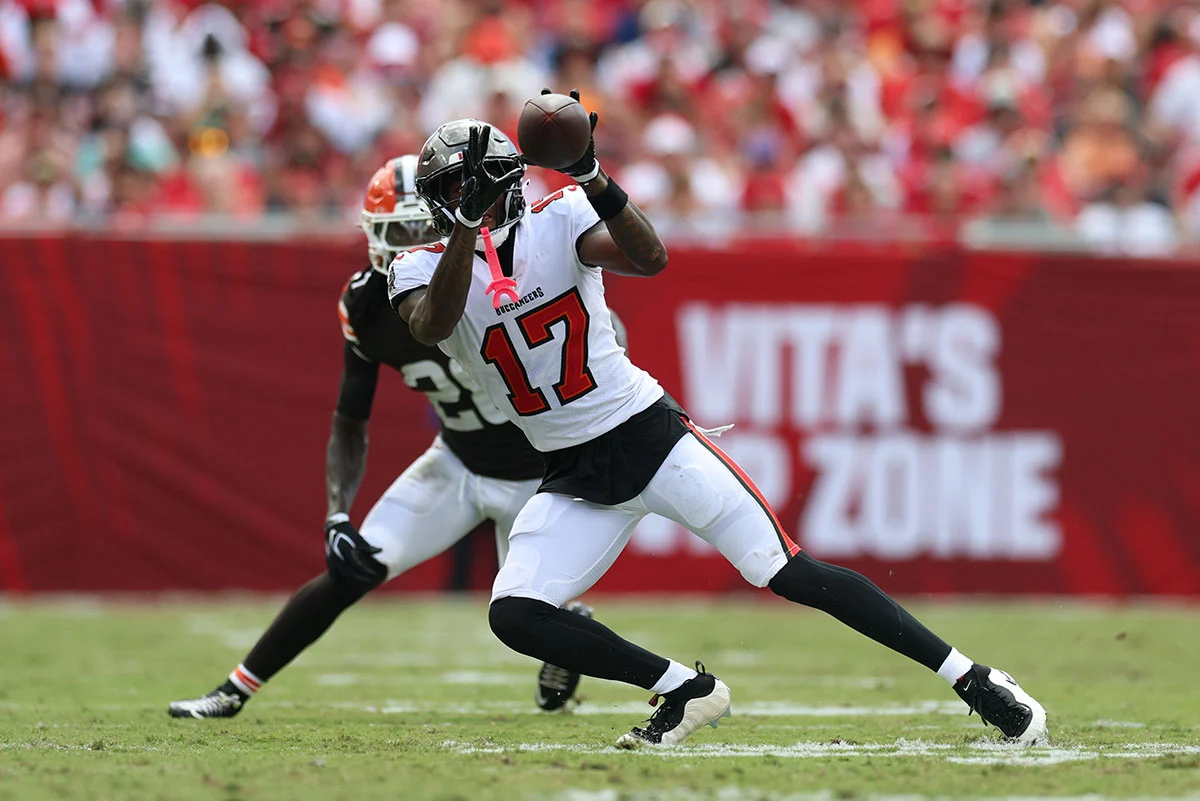
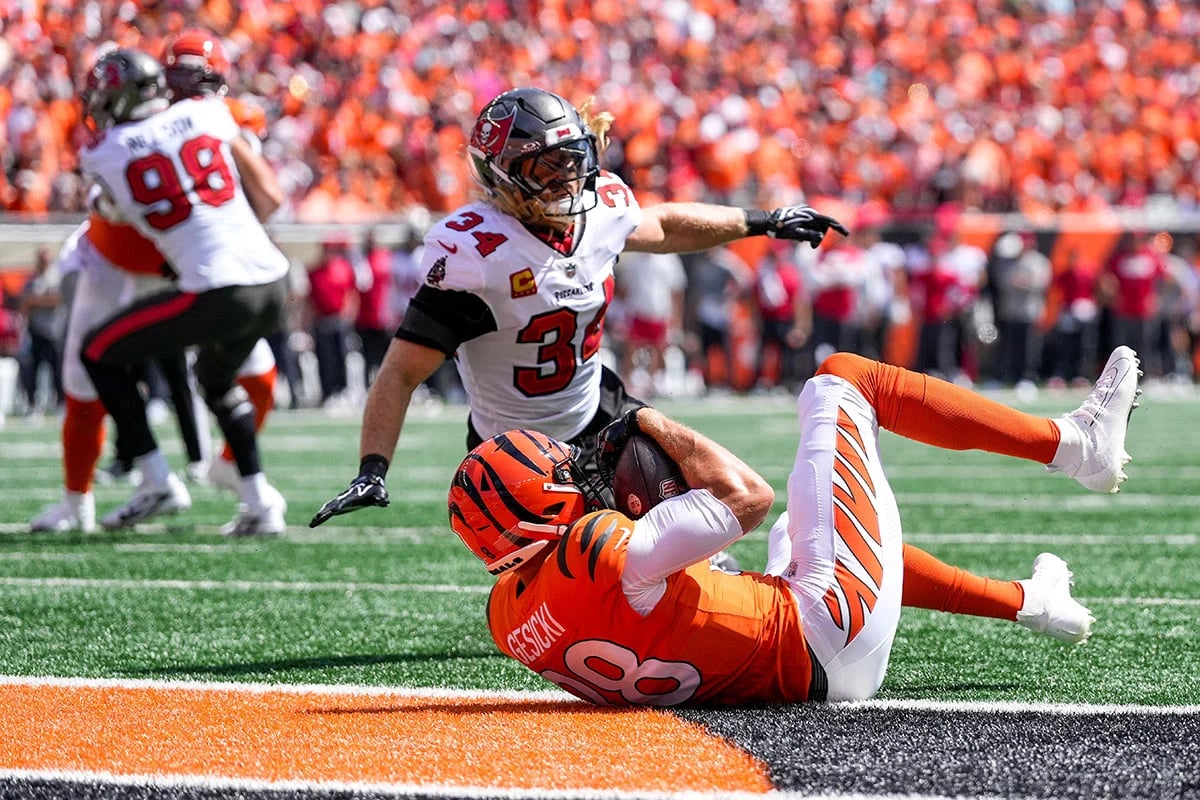
Tampa Bay is 0-2 for the first time since 2014, and the easy explanation is Baker Mayfield's turnovers: three fumbles at Cincinnati, an interception against Cleveland. That story has already been told in the Week 1 and Week 2 recaps, and a separate piece will dig into Mayfield himself. The offense around him has a problem that turnovers do not fully explain: through two games, it has not scored enough, on enough plays, when it mattered most.
Key facts
- Tampa Bay's offense produced 20 of the team's 27 points at Cincinnati in Week 1 and only 19 total points, on one touchdown and four field goals, against Cleveland in Week 2.
- The Bucs went 2 of 4 in the red zone in Week 1 and 1 of 3 in Week 2, and converted third downs at 50 percent (5 of 10) in Week 1 and 44 percent (7 of 16) in Week 2.
- Tampa Bay allowed 4 sacks against Cincinnati and 3 against Cleveland, seven total through two games.
- Bucky Irving played 51 offensive snaps in Week 2 to Kenny Gainwell's 23, after the two backs were separated by only nine snaps in the opener.
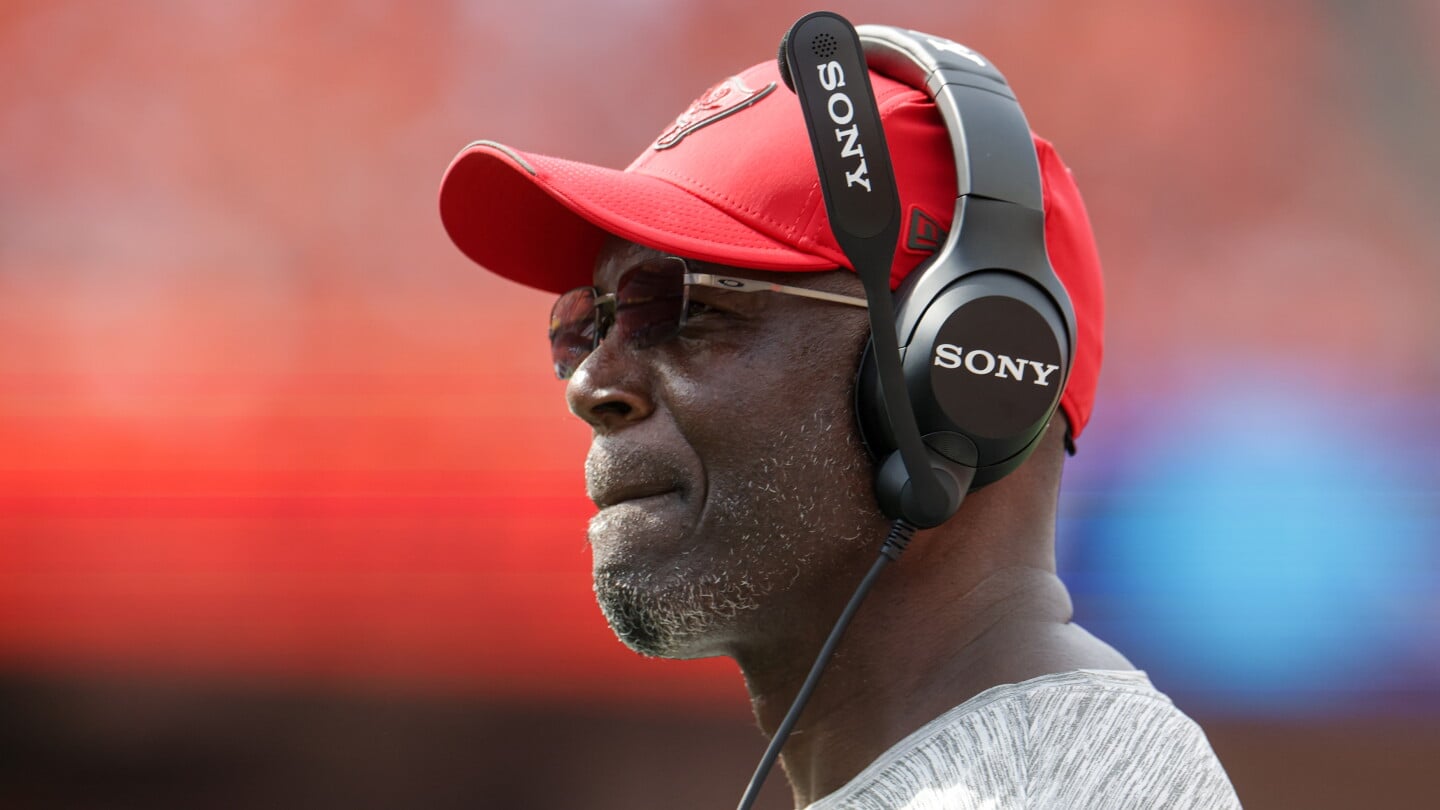
- Head coach Todd Bowles said on September 21 that the offense needs more explosive plays: 'We've got to make plays on offense. We can coach it better for sure.'
The math behind two low-scoring days
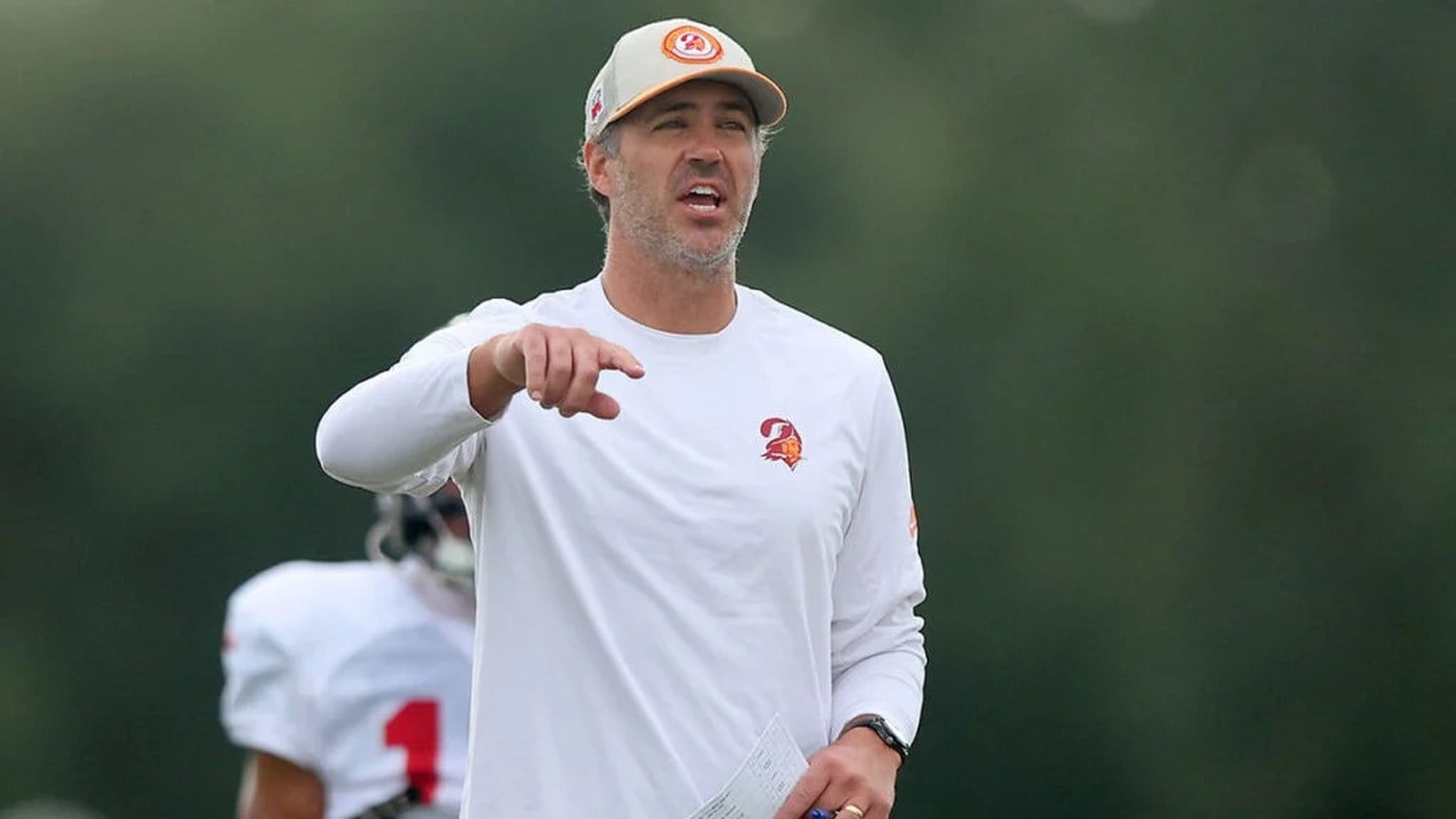
At Cincinnati, the Buccaneers scored 27 points, but seven of those came from rookie linebacker Josiah Trotter's pick-six, not the offense. That leaves 20 points from Zac Robinson's unit across an entire game, on 305 total yards. Against Cleveland, the offense scored all 19 points itself, but it did so on one touchdown, a 5-yard pass to Emeka Egbuka, and four Chase McLaughlin field goals. One touchdown in a game the Bucs led for most of the second half is not enough.
The red zone numbers explain part of it. Tampa Bay went 2 of 4 in the red zone at Cincinnati and 1 of 3 against Cleveland, settling for field goals or coming away empty on trips that should have ended in touchdowns. Third down was inconsistent too: 5 of 10 (50 percent) in Week 1, 7 of 16 (44 percent) in Week 2.
Points (offense) | Total yards | Third down | Red zone | Sacks allowed | |
|---|---|---|---|---|---|
Week 1 at Cincinnati | 20 of 27 | 305 | 5 of 10 | 2 of 4 | 4 |
Week 2 vs. Cleveland | 19 of 19 | 313 | 7 of 16 | 1 of 3 | 3 |
Bowles wants plays this offense is not making
The day after the Cleveland loss, Bowles was asked directly about the offense's ceiling. "We've got to make plays on offense. We can coach it better for sure," he said, adding that the Bucs have handled tougher situations in practice than they did inside the 28-yard line during the game. It read as a coach sharing blame between his play caller and his players without naming names.
The box score is more nuanced than the frustration suggests. Against Cleveland the Bucs actually produced four gains of 20 or more yards: a 49-yard catch by Tez Johnson that set up the go-ahead field goal in the fourth quarter, a 24-yarder to Chris Godwin, a 21-yarder to Ted Hurst III and Bucky Irving's 38-yard run. That is a real step up from Robinson's Week 1 debut, when the Bucs had four gains of 10 or more yards and zero of 20 or more. The problem in Week 2 was not the absence of chunk plays but what happened once the offense got close: 1 of 3 in the red zone, and the rest of the passing game built on screens, checkdowns and quick game that moved the chains without threatening the end zone.
The run game found a lead back, and lost one
Bucky Irving carried the ground game against Cleveland: 17 carries for 89 yards, and 51 offensive snaps, easily his workload for the year. Kenny Gainwell, by contrast, played just 23 snaps and touched the ball five times, a sharp drop from Week 1, when the two backs were separated by only nine total snaps. Sean Tucker has barely factored in either week. The other name missing from that room is Rachaad White, who started ahead of an injured Irving for parts of 2025 but signed with Washington in free agency in March, leaving Tampa Bay to lean on Irving as its clear starter behind a run scheme built for exactly his skill set.
That is one problem solved. It has not translated into more points, partly because Gainwell dropped a third-down pass in the red zone against Cleveland that turned a potential touchdown drive into a field goal, the kind of individual mistake that erases a scheme's design.
A receiver room closer to full strength, still finding its shape
Life after Mike Evans was always going to be a multi-week story, and it is still being written. Chris Godwin and Jalen McMillan were both back for Week 2 alongside Egbuka, filling out the room BucsWorld projected in its season-long look at the position. The results were uneven: Godwin played 86 percent of the snaps and caught three passes for 46 yards, Egbuka matched that snap share but managed only three catches for 16 yards, one of them the touchdown, and McMillan, still working back into form, played just seven snaps. Rookie Ted Hurst III worked in on 74 percent of snaps and was the target on a dropped touchdown earlier in the game, before also drawing the final incomplete pass of the night. Cade Otton remains the safety valve underneath, and he is getting used that way.
Protection has actually gotten better
One place the offense improved: pass protection. Tampa Bay allowed four sacks at Cincinnati and three against Cleveland, a modest step in the right direction rather than a crisis. Seven sacks allowed in two games is not the reason this offense is 0-2.
The final drive that ended in the rain
Cleveland's go-ahead touchdown with 3:51 left set up the game's defining sequence: a Buccaneers drive into scoring range, then a lightning delay of roughly two hours before play resumed. When it did, Mayfield's fade to Hurst in the end zone fell incomplete, and so did his follow-up throw to Egbuka on the next snap. The delay did not cause the problem, it just supplied the pause before the offense's actual issue, execution in the red zone, ended the game.
The verdict
Some of this is play-calling. A passing game that went a full game in Cincinnati without a gain of 20 or more yards, and leans on screens and checkdowns as its base rather than its complement, is not going to consistently finish drives with touchdowns instead of field goals, no matter how well the motion and play-action dress it up. Some of it is personnel and execution: a dropped third-down pass, a dropped end zone target, and a third receiver, Jalen McMillan, who has played seven offensive snaps all season are not scheme problems, they are drops and depth problems.
Before Minnesota visits Raymond James Stadium on September 27, the fix is not a new system, it is more shots when the Bucs already have the matchup, and cleaner hands on the ones the design already creates. Robinson has shown he can install an identity, the motion-heavy, play-action-heavy offense is real and it shows up in the numbers every week. What he has not yet shown is that identity finishing drives in the red zone or hitting a defense over the top. That is the gap between 0-2 and a Tampa Bay offense that looks like the one described back in August.
No comments yet. Start the conversation.